
 Helena Izotova
⬤ Oil market behavior has fundamentally changed since mid-2025. The long-standing relationship between price and volatility has completely reversed. Historically, when oil prices fell, volatility spiked—reflecting demand-driven fear in the market. Now we're seeing the opposite: higher oil prices are coming with increased volatility, marking a clear transition from demand-driven anxiety to supply-risk dominance.
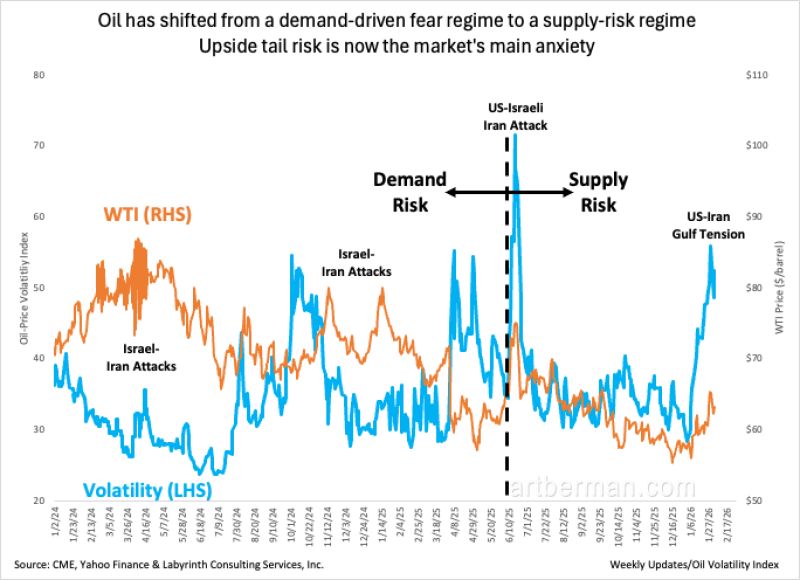
⬤ The data tells the story clearly. Compare WTI crude prices with oil price volatility indexes and you'll see the shift. In earlier periods, volatility spikes aligned perfectly with price declines, signaling market anxiety around economic slowdowns and weaker demand. Since mid-2025, though, volatility has been rising during price advances. Higher prices aren't calming the market anymore—they're amplifying uncertainty as traders focus on potential supply disruptions.
This marks a transition from a demand-driven fear regime to one dominated by supply risk.
⬤ Geopolitical events are driving this new regime. Episodes of heightened tension in major oil-producing regions now coincide with sharp volatility increases even as prices climb. The market isn't primarily reacting to demand weakness anymore—it's responding to concerns about production stability, transport security, and geopolitical escalation. Upside tail risk has become the central focus.
⬤ This changes everything about how we interpret oil price movements. In a supply-risk regime, rising WTI prices can actually increase volatility instead of reducing it. With upside tail risk now the market's main concern, volatility will likely stay elevated during price rallies, signaling a structural shift in how oil market risk is perceived and priced.
 Helena Izotova



