Nataly Kambur

⬤ Gold traders witnessed a dramatic reversal after what initially appeared to be a textbook breakout. The precious metal spent three months forming a rising wedge pattern through mid-January before finally breaking above the upper boundary. That technical trigger sparked immediate buying interest and set off a powerful rally that had many market watchers convinced the breakout was legitimate.
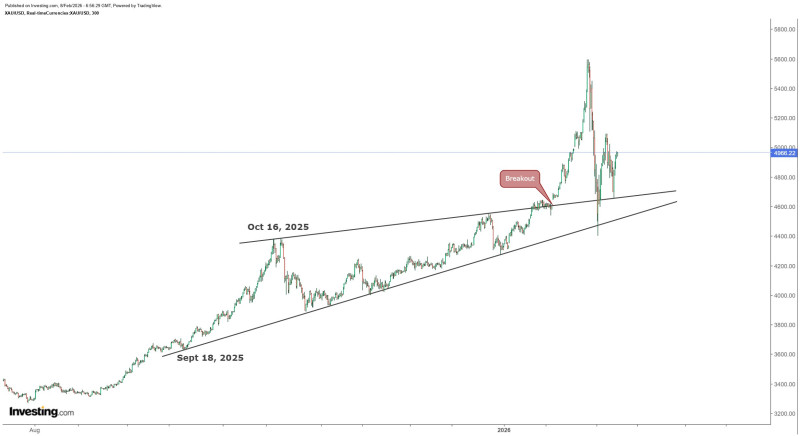
⬤ Once XAU cleared that resistance level, things moved fast. Gold climbed roughly 21 percent in about twelve trading days—an aggressive pace that pulled in momentum traders and even seasoned participants who entered positions at the breakout point. The confirmation seemed solid, and the follow-through was convincing enough to keep buyers engaged through the entire move higher.
⬤ But the rally didn't stick. Gold reversed course and gave back everything it gained. Price dropped back below the wedge's upper boundary first, then fell through the breakout level entirely, and eventually broke down through the lower boundary of the formation. In other words, the market went from breakout mode to breakdown, erasing all those gains and putting XAU right back where it started before the pattern completed.
⬤ This kind of whipsaw action shows just how fast sentiment can flip in the gold market, especially after extended runs. When a breakout fails this completely, it's usually not just a minor pullback—it forces traders to rethink their positioning and often triggers waves of stop-loss orders. What looked like a momentum shift turned out to be more of a liquidity grab, leaving the market stuck back in range-bound trading and raising questions about what comes next for XAU.
 Nataly Kambur