Alex Borzak

⬤ WTI crude oil continues trading under pressure on the weekly chart, settling around $61.50 after an extended slide. The chart shows crude struggling below a descending trendline that's been capping rallies for years, though recent candles hint at slowing downside momentum. After dropping from higher levels, oil's now consolidating near a key horizontal support zone.
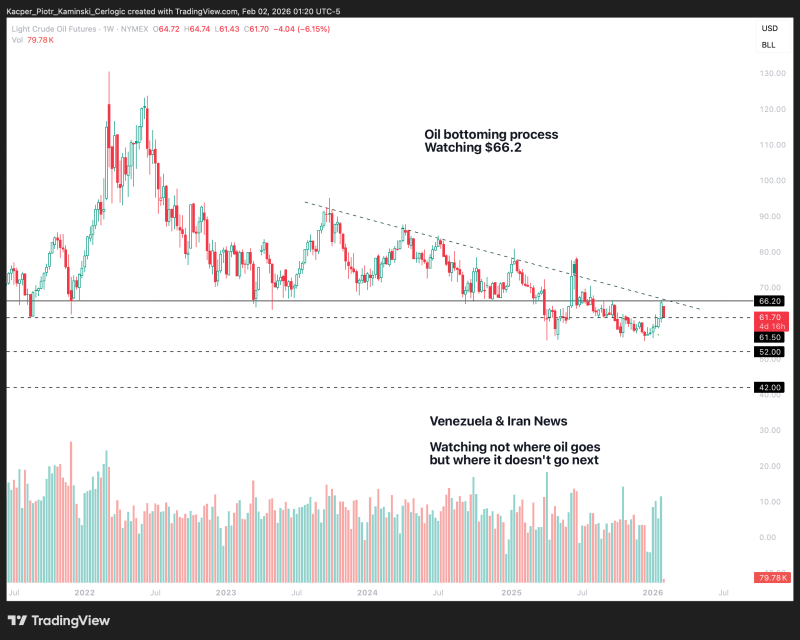
⬤ The geopolitical premium tied to potential Iran escalation is getting priced out of the market. This shift has coincided with continued weakness in crude prices, echoing previous episodes of risk-driven supply concerns like those around Venezuela. The chart reflects this sentiment change—upside reactions have been muted despite periodic news-driven volatility. Instead of pushing higher, oil has drifted lower and settled into a tight range near recent lows.
⬤ The $61.50 level stands out as a critical reference point. The chart highlights this area as a near-term floor where prices are currently landing. While there's no confirmed reversal yet, the structure suggests a potential bottoming process rather than an immediate breakdown. The chart also marks broader downside zones near $52 and $42, which would become relevant if support fails. Right now, the focus is whether oil can form a higher low—an early signal of stabilization within the existing downtrend.

⬤ This development matters for the energy market because it shows a transition from risk-premium-driven pricing to a more technical phase. When geopolitical premiums fade, price action typically becomes more sensitive to support levels and trend structure. With WTI consolidating near $61.50, the market's attention has shifted to where prices stabilize rather than where they rally next. How this consolidation plays out will likely shape volatility and trend expectations in the coming weeks as supply narratives and geopolitical factors continue to evolve.
 Alex Borzak