Alex Borzak

⬤ US natural gas storage has slipped back into deficit territory against historical benchmarks. Realtime inventories fell below 2,500 Bcf and dropped under the five-year average overnight. Current storage sits at approximately 2,484 Bcf, compared to the five-year average of around 2,499 Bcf and last year's level of 2,437 Bcf for the same period.
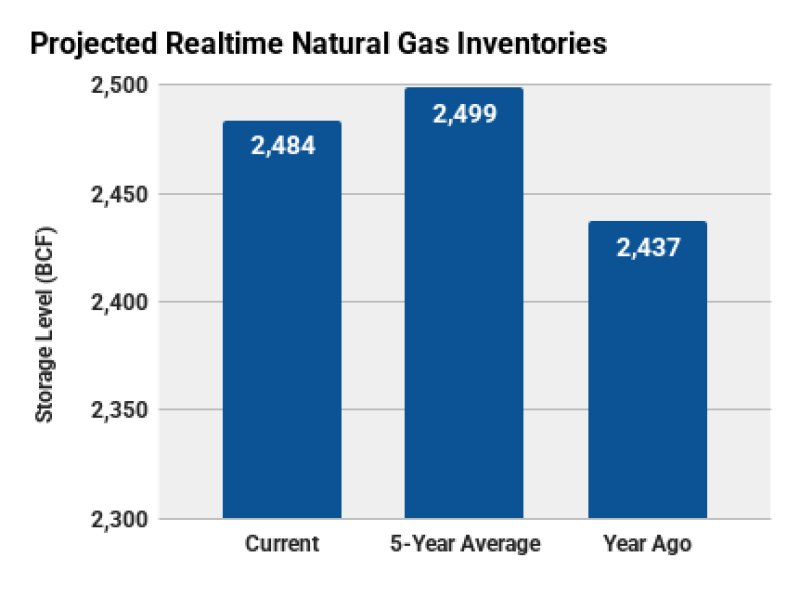
⬤ The shift reverses earlier conditions when storage tracked closer to seasonal norms. Inventories now run about 15 Bcf below the five-year benchmark, marking a return to deficit status after relative balance. While still slightly ahead of last year's numbers, the drop below long-term averages points to stronger withdrawals and tightening supplies during peak winter demand.
⬤ Projections suggest the deficit will expand over the weekend. Continued draws could push the gap into triple-digit territory versus the five-year average if current patterns hold. That would signal a meaningful shift in storage dynamics and make markets more sensitive to weather changes and demand swings, both major drivers of weekly inventory movements.
⬤ The development carries weight for broader energy markets since natural gas storage serves as a key reference for price expectations and volatility. When inventories fall below historical norms, markets zero in on supply adequacy—especially during high seasonal demand. As the projected deficit grows, short-term sentiment may react more sharply to data releases and forecast updates. The latest storage outlook provides crucial context for understanding recent natural gas price action and the evolving supply-demand balance.
 Alex Borzak