
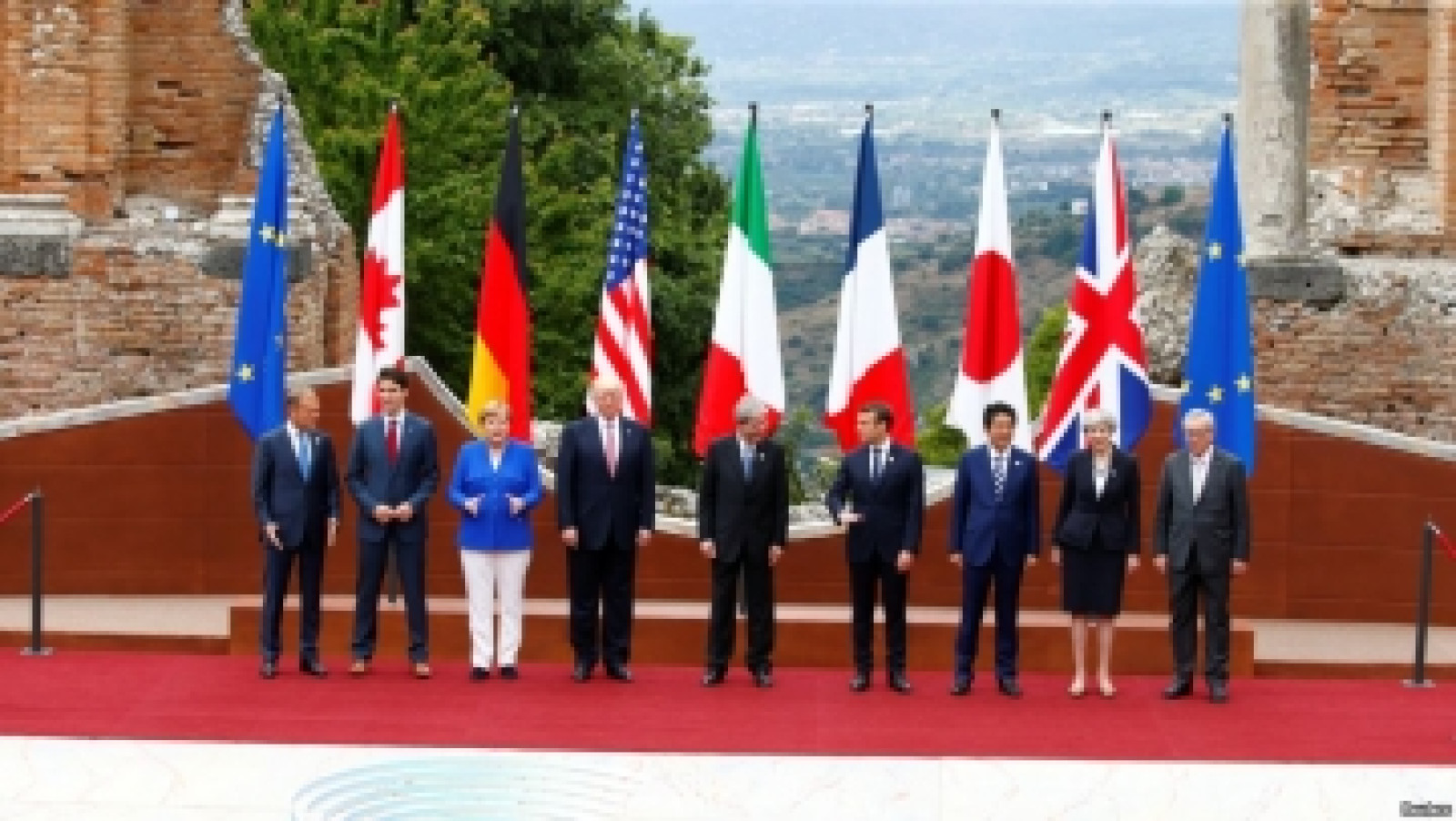
In the final communique of the recent G7 summit in Quebec, Canada, there is warning for Russia. In particular the G7 warns Moscow that they are ready to impose even more sanctions on Russia in case of further aggression.
The leaders of the UK, Germany, Italy, Canada, France, Japan, and the United States agreed on the possibility of expanding the list of sanctions against Russia to make the Kremlin feel the pressure of those sanctions. This is said to be the response to Theresa May's calls for responding to the Kremlin's attempts to undermine the democratic system and support of Bashar Asad's regime in Syria. At this point, they think, a dialog with Russia is only possible in the context of solving regional and global crises.
At the same time, the participants of the G7 summit decided to work out a new system against propaganda – the so-called quick reaction mechanism. This mechanism is supposed to be instant and efficient when reacting to unacceptable actions designed to undermine the political situation in democracies worldwide coming from such powers as Russia.
Also, they agreed to take common actions to prevent Iran from becoming a nuclear power.
It should also be noted that, all of the participants expect the USA backed the climate agreement. They also claimed an intension to respond to the USA's protectionism in terms of imposing duties on steel and aluminum imports.
Some international experts conclude that since excluding Russia from G8, the coalition of the world's leading states has become more committed to democratic principles.



