
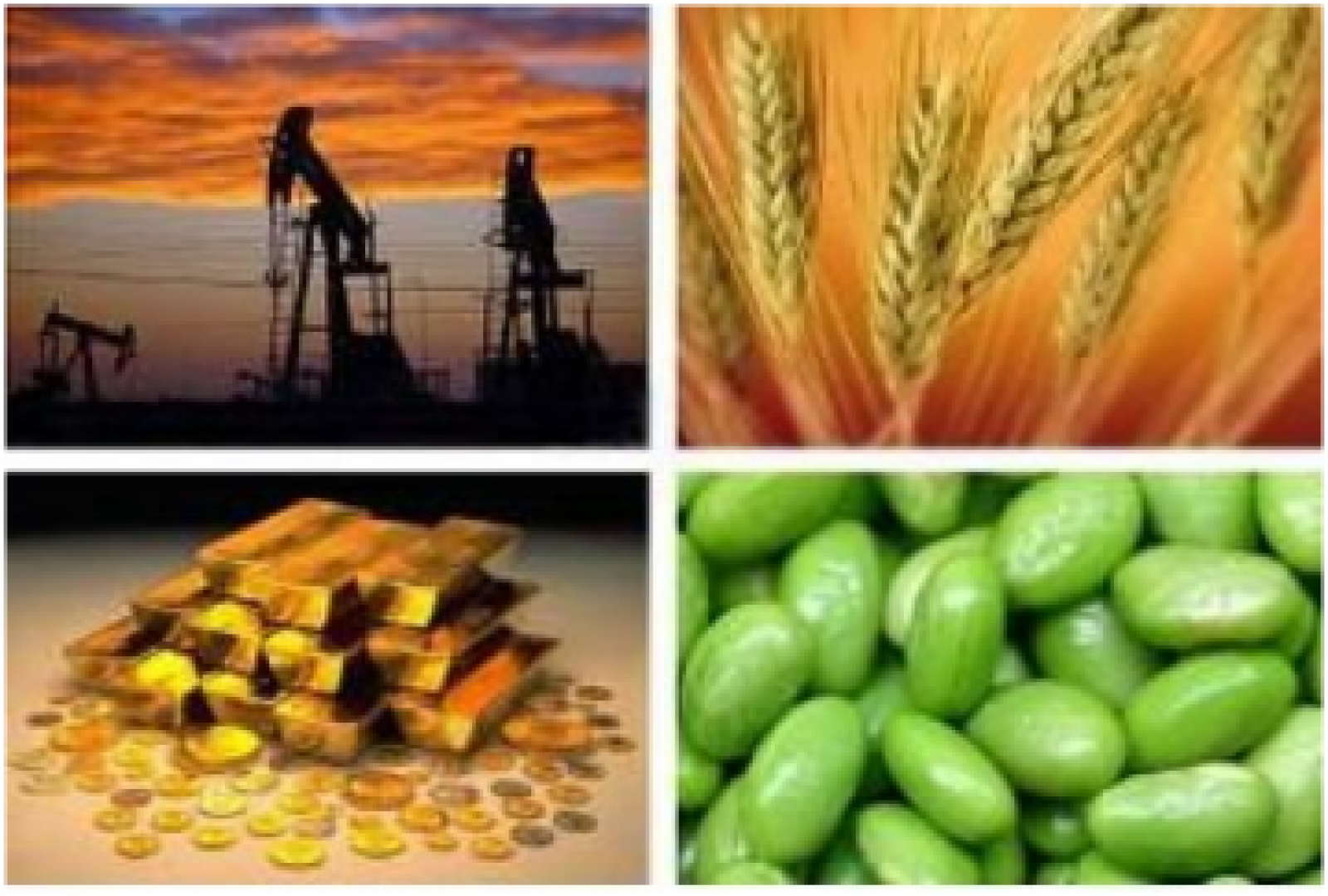
The situation in commodity markets is changing as investments banks are quitting the sector. Those banks that have been dominating the market over the last decade are now selling their commodity departments. Apparently, investors have become less interested in commodity trading as the commodity super-cycle is nearly over. At the same time, regulators are getting increasingly interested in the commodity sector.
What are the near-term prospects of the commodity sector? Let’s try to find it out together with HY Markets, a major broking company specializing in Forex, commodities, stocks and other financial markets.
Commodities
Gold. As the global economy seems to be improving and recovering, this cannot but affect the global market of gold. Gold starts losing its attractiveness since it is usually popular as a safe-haven asset in time of economic and financial instability and uncertainty. Analysts are growing pessimistic about the near-term prospects of gold.
Still, they say gold is going to get some minor support. In particular, they expect India, a major gold consumer, to weaken its gold policies to allow more import of the precious metal in the near future. At the same time, we can expect a flight of gold from ETFs. Still, the biggest support for gold will be provided by the fact that the overall production of gold is slowing down at the moment and will definitely continue to do so in 2014 and 2015. At the same time, central banks around the globe are expected to keep purchasing massive amounts of gold to boost their gold reserves. So, these factors lead us to believe that gold prices may well stabilize and even recover a little bit.
Still, in late 2013, several major European banks revised their gold forecasts for 2014 to decrease them a little bit. For example, UBS downgraded its forecast from $1325/oz down to $1200/oz for 2014. At the same time, Societe Generale thinks that gold my drop in value down to $1050/oz by late 2014.

As for non-precious metals, including aluminum, copper, nickel and zinc, they will gradually gain value but are likely to fail to exceed their 2013 highs. According to Moody's, copper is likely to trade around $3 per pound while aluminum – $0,8 per pound. The global demand for industrial metals will be growing gradually and unsteadily. Industrial production will definitely be the key market driver.
Crude Oil. The crude oil market is getting ready to face a bearish cycle, some experts assume. Despite the positive report on the global demand for crude oil published by the IEA, the average forecast for 2014 is rather pessimistic. The demand will be growing but the supply is going to catch up with it, especially when it comes to non-OPEC oil producers. At the same time, there is a chance that Iran may face new sanctions form the West while Libya may get its oil problems resolved. It this is the case, this is definitely going to boost the global demand for crude oil in the near future. According to HY Markets, crude oil may well devalue down to $80/b on average.

At the same time, the current situation in stock markets looks controversial and ambiguous. On the one hand, it seems like stocks are set to go further up as the US economy is growing and the companies are likely to follow. On the other hand, the recent season of quarterly reports has shown that the market doesn’t always react to the figures the way it should be (the way we are taught to treat it). Therefore, there are reasons to consider an alternative scenario.
And finally, let’s consider food prices. In 2013, global food prices stabilized at pretty high levels. At the same time, according to the UN, the prices on sugar and some grains are falling due to excessive harvests gathered last year. Vegetable oil is also losing value. At the same time, the prices on meat and dairy products are at all-time highs since there is higher demand for them worldwide.
According to the experts working for HY Markets, the overall tendency in the food market will remain bullish despite abundant harvests since the demand in Asia and the East is constantly growing.
Азии и Востока из-за роста населения и повышения спроса со стороны развитых стран из-за оживления экономики.



