
 Tatiana Kashyrskaia
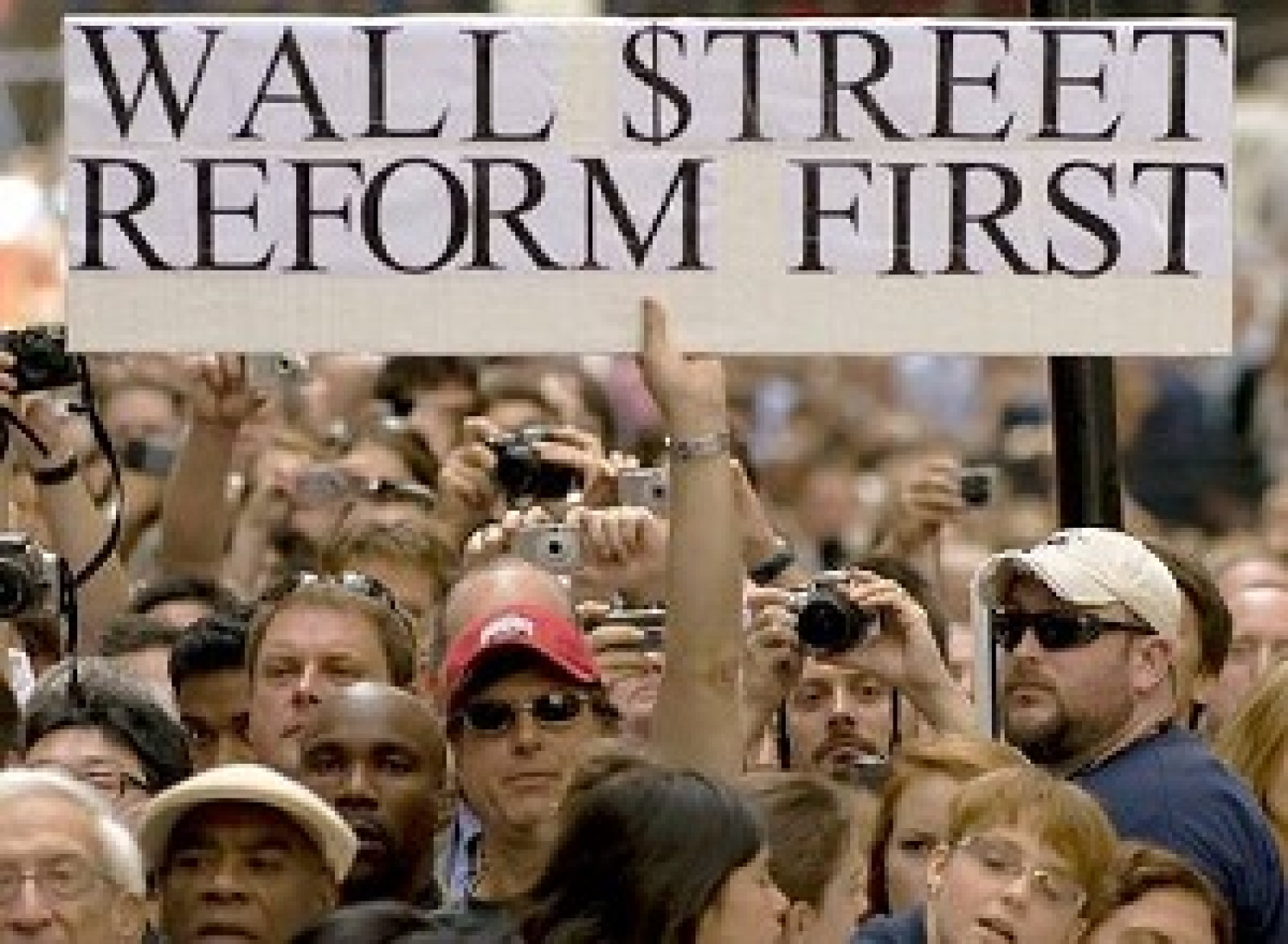
Last Saturday thousands of protesters crowded the streets of Manhattan, New York. The police arrested more than 700 participants of the protest.
What is common between the Arab revolutions and the Wall Street Blockade?
According to the experts of , these events have much in common, especially if to compare the latest events in Manhattan with the first stage of the Arab unrest:
Large-scale participation. Sunday’s events in New York involved thousands of people, with more than 700 detainees, which is more than it was arrested in Arab countries during the first days of demonstrations.
Well-organized movement. The Wall Street Blockade was a part of the Occupy Wall Street protest, which now seems to have grown into a movement.
Social networks. The protesters communicate though Facebook and Twitter, informing each other and coordinating their activities.
The spread of the protest. Similar protests were organized in other US cities: Washington, Boston, Chicago, San Francisco.
The authorities made some clumsy steps, including the mass arrests of peaceful protesters. Moreover, in San Francisco the local authorities ordered to cut off power from the local cellular towers, thus causing a lot of inconvenience.
Martyr. In the Arab countries there were some people who committed self-immolation in protest or were shot by the police. The US protests have their own specifics. The protesters found their own martyr - Troy Davis - a prisoner sentenced to death for killing a policeman in 1989. For 22 years Davis denied his guilt. But the US Supreme Court refused to pardon him. On September 22nd Troy Davis was executed. His name was written on numerous banners carried by some of the protesters.
 What are the differences between the Arab unrest and the Wall Street protests?
According to Evgeny Olkhovsky, a Canadian expert and a member of , there are few differences but they are very significant:
The absence of spontaneity. The first calls to participate in the Occupy Wall Street protest were published in «Adbusters» on August 13 June 2011. The very protest (Occupy Wall Street) has been going on since mid September 2011. The protesters tried several times to set up a camp right next to NYSE.
Slogans. In terms of slogans, there is a huge difference between the US and Arab protesters. In the Arab countries the protesters wanted their leaders to resign, simultaneously demanding to eliminate corruption and censorship. In the US the slogans concerned economic problems:
The protesters were indignant at financiers’ greediness and fed up with social inequality, mortgage crisis, high-ranking officials’ super-incomes and growing unemployment. On Saturday the protesters opposed “financial terrorism” initiated by Wall Street.
They posted a manifesto of 13 demands. You can find the full text here: http://occupywallst.org/forum/proposed-list-of-demands-for-occupy-wall-st-moveme/
In essence, they support Barack Obama’s calls to increase taxes for the rich and to redistribute the money by spending it on social needs.
In other words, it is a typical US protest, where its participants believe in the miraculous power of various amendments, bills and reforms.
The bottom line: the Arab unrest and the Wall Street protests are different in essence even though they have much in common.
Some facts about Wall Street and common Americans
According to the analytic team of FOREX MMCIS (among the top brokers of Masterforex-V’s rating of FX brokers ), in 2010 the USA’s 25 biggest financial companies paid their employees $135B, which is 7B more than in 2009.
For example, Bank of America paid $35.1B (11% more than in 2009). These companies spend over 34% of their annual income on salaries and bonuses. At the same time, in 2010 the amount of Americans living behind the poverty line hit the record level of 46.2M people (or 15.1% of the country’s population). In 2010 the average income of an average American declined by 2.3% as compared with 2009. Around 50M Americans do not have healthcare insurance.
US Dollar prospects:
According to the Department of Masterforex-V trading system , the USD index keeps moving in the 73,51-74,57 range. The direction of the forthcoming breakout will determine the next mid-term trend:
Once the price breaks the top, it will form a FZR H4 with 74,83 being the next level of resistance. Otherwise, if there is a downward breakout, the USD index will continue its long-term downtrend.

Market Leader and would appreciate it if you could participate in a survey. Please, visit the Academy’s forum for traders and investors and answer the following questions:
Will the Occupy Wall Street protests grow into anything more serious?
 Tatiana Kashyrskaia



