Edward Culchenko
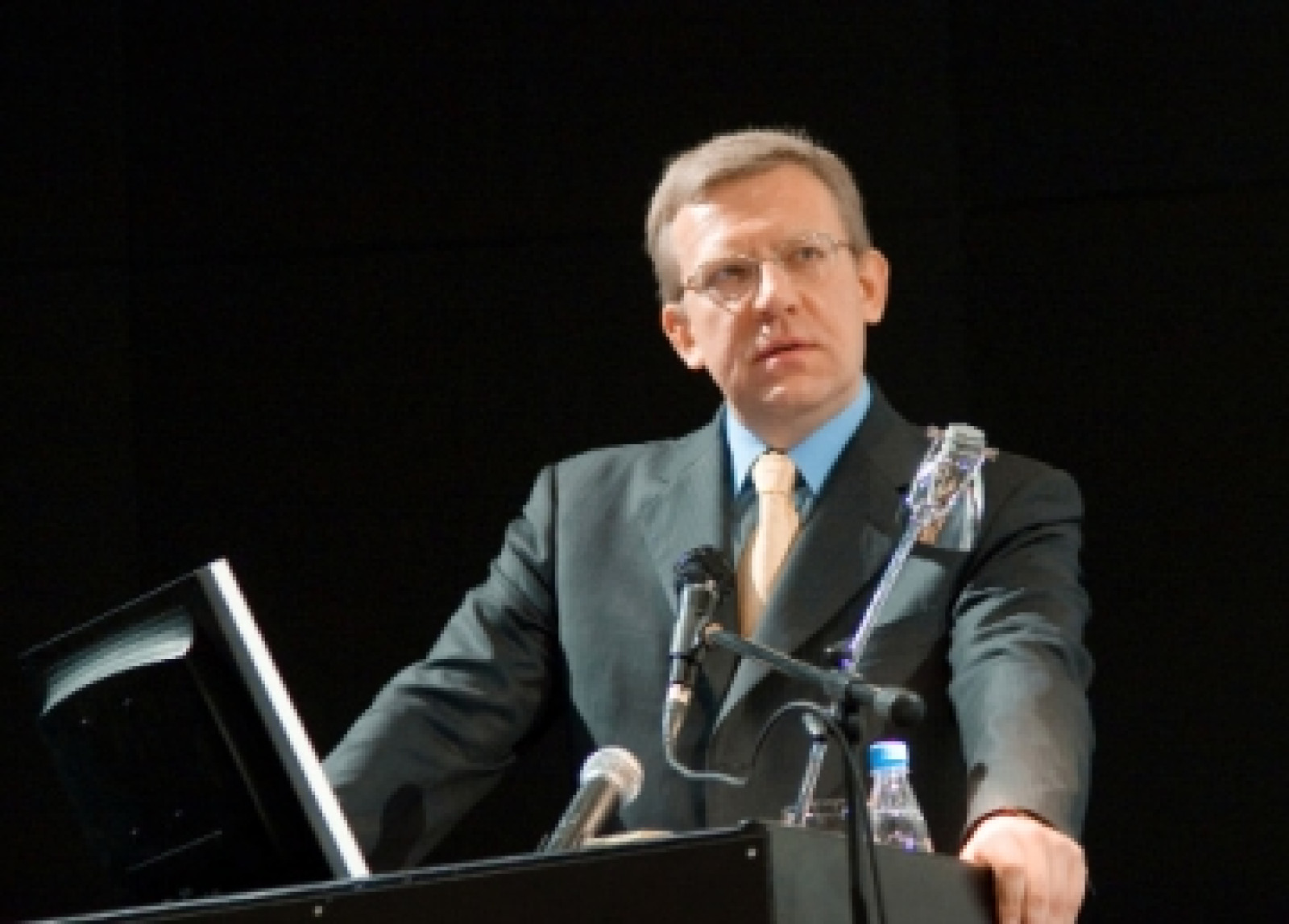
Russia, Moscow. Aleksey Kudrin, Minister of Finance and Deputy Prime Minister of Russia, joined Nouriel Roubini, Charles Nenner, Warren Buffet, George Soros and Alexander Lukashenko in his pessimistic view of global economic perspectives. He also anticipates the 2nd wave of the global crisis.
During his speech at the St. Petersburg Annual International Economic Forum Mr. Kudrin said that the probability of another major crisis was still high. Why do the world’s leading financiers feel so pessimistic about the perspectives of the global economy?
Kydrin’s pessimistic forecast and reasons for it.
According to the Russian Association of Traders and Investors under , Mr. Kudrin assumes that the world’s leading economies may see a considerable slowdown within the next 3 years. It is not inevitable but the probability is high.
1. The threat of another major crisis still exists. The crisis is postponed, not eliminated.
2. The following factors can explain the existing jeopardy:
- Firstly, the uncertainty is fairly high. All the indicators of the leading economies are unstable.
- Secondly, in fact the U.S. consumer model, which led to the gigantic public debt, hasn’t been changed. Will the Americans manage to put up with the significant reduction of budget spending? This is what the future of the US and global economies depend on. Moreover, the U.S. needs an interest rate increase in order to curb inflation and to free the American banks from the so-called “bad” assets.
- Thirdly, the eurozone has serious problems to solve. Some eurozone countries still may default on their debts.
- Fourthly, numerous “emerging” markets have “price bubbles” which can burst at any moment.
- And finally, Chinese economy may face overheating, with unexpected consequences.
-
Kudrin’s solutions
Aleksey Kudrin assumes that the world’s leading countries should reduce their budgetary spending by at least 15-20%, which in its turn implies the revision of social support models.
· The countries should reconsider their priorities concerning the governmental support of some economic sectors.
· There is a need to switch to new conditions of global economic development, which may take a few years.
Do the world’s leading economists and investors agree with Aleksey Kudrin?
Many big-scale financiers share Mr. Kudrin’s pessimistic point of view. According to a behind-the-scenes survey conducted during the St. Petersburg Forum, the picture of the near-term economic future is rather gloomy:
1. Defaults around the world. 53.4% of the respondents assume that within the next 5 years from 1 to 3 countries will default on their debts. 46.6% of the respondents are sure that defaults will be seen in 4 or more countries.
2. The poor condition of the U.S. economy. 47.7% of the respondents say that either a recession or an economic slowdown will take place in the USA, 20,3% – in the E.U. , 15,2% – in China or other countries with developing economies.
3. Only 10.1% say there won’t be any 2nd wave of the global crisis.
Nouriel Roubini outpaced Aleksey Kudrin
A couple of days ago Nouriel Roubini, the famous financial analyst who predicted the global crisis in 2007, made a similar forecast. According to him the there is a “perfect storm” of 4 threats, which may hit the global economy in 2013. The 4 threats are the possibility of an economic slowdown in China, the damage done to Japan, the current debt crisis in Europe and the emerging crisis in the USA.
· Nouriel Roubini says that the global economic slowdown is one of the major factors make the 2nd wave inevitable. Even now such tendencies are getting more evident.
· Another major factor is the growing sovereign debts of numerous countries and corporations.
· Investors keep losing confidence in the global economy in general and the U.S. economy in particular. The U.S budget deficit will keep growing.
· Moreover, if the EU keeps postponing the restructuring of Greece, Portugal and Ireland’s public debts, the eurozone well may be disintegrated.
· Excessive investments in China’s basic capital may lead to “bad loans” and idle capacities. Moreover, China desperately needs consumption growth. Without it the Chinese economy will inevitably see a slowdown.
EURUSD perspectives.
According to the Department of Masterforex-V trading system , EURUSD is retracing against the long-term uptrend. The currency pair is developing wave b(C ) of H4. If there is a bearish FZR, another downswing will take the form of wave c(C ) H4. 1.4073 will become the closest level of support.
A break below 1.3969 will form a bearish FZR of Daily 2. So the retracement will start wave C of Daily2. A rally along the major uptrend can be expected only when the price break above the MF pivot and sloping channel (as shown below).

As for the USD exchange rate, it should be noted that the U.S. T-bonds have gained value on expectations that the agreement between the EU and the IMF will help Greece to avoid default:
· 10-year bond yield lost 2 points declining down to 2.96%
· May 2021 bonds gained 3.125%
· Previously 10-year bond yield reached 2.88% (the lowest level since Dec 1st)
· 2-year bond yield declined down to 0.34% (the lowest level since Nov 5th)

The USD index is in the ISF (intersession flat). The price has formed the 2nd peak 1.6116 = 62% А/В 1.6150-1.6061. There are 2 possible scenarios:
1. Another upward wave a(C )/C
2. A downward FZR 1.6091
Market Leader and would appreciate if you could visit the Academy’s forum for traders and investors and answer the following question:
Will there be the 2nd wave of the global crisis?
· Yes, it will. It is inevitable.
· It will probably take place if there are no timely steps taken to prevent it.
· No, it won’t take place in the near future.
 Edward Culchenko