
 Vlad Demochko
A series of other provocations of Japan against Russia. Unidentified individuals sent the RF Embassy in Tokyo a letter by regular mail which contained a rifle bullet and a brief note: 'Northern territories are Japanese land' on Monday, 7 January 2011, a day on which Japan traditionally celebrates the Day of Northern Territories. At the same time, members of one of Japanese organizations defiled the Russian flag, while Japan's Prime Minister Naoto Kan described the November 2010 trip of Russian President D. Medvedev to Kunashir Island as 'outrage'.
What does such an aggravation of situation threaten the Russia, Japan and the Far East with? Why do problems dealt with in the article titled 'Secret Diplomacy for Kuril Islands: What Lies Behind the Conflict between Tokyo and Moscow?" find their continuation and where does this trend take us?
It was long ago that Japan witnessed such stormy events on the Day of Northern Territories for the last time.
As analysts of the Land Association of Japan within the Masterforex-V Trading Academy inform, this year the Day of Northern Territories went off in a very stormy manner:
1. Representatives of a variety of ultra-right organizations got together early in the morning next to the building of the Russian Federation's Embassy with posters demanding that islands of the southern part of the Kuril Ridge be returned to Japan, chanted similar slogans, read out petitions. In conclusion, Japanese protesters defiled the state flag of Russia which implies extreme degree of hostility. First they tore it apart, then used its pieces to wipe asphalt in front of the entry to the Russian Embassy. Japan has a tradition of carefully treating any flags, both Japanese and foreign ones. A flag for the Japanese is no simple piece of cloth, it is a symbol of honor, dignity and greatness of the country. At home, in addition to their own flag, many Japanese people keep flags of foreign states. Defilement of another flag is not typical of them like, it isn't the Middle East.
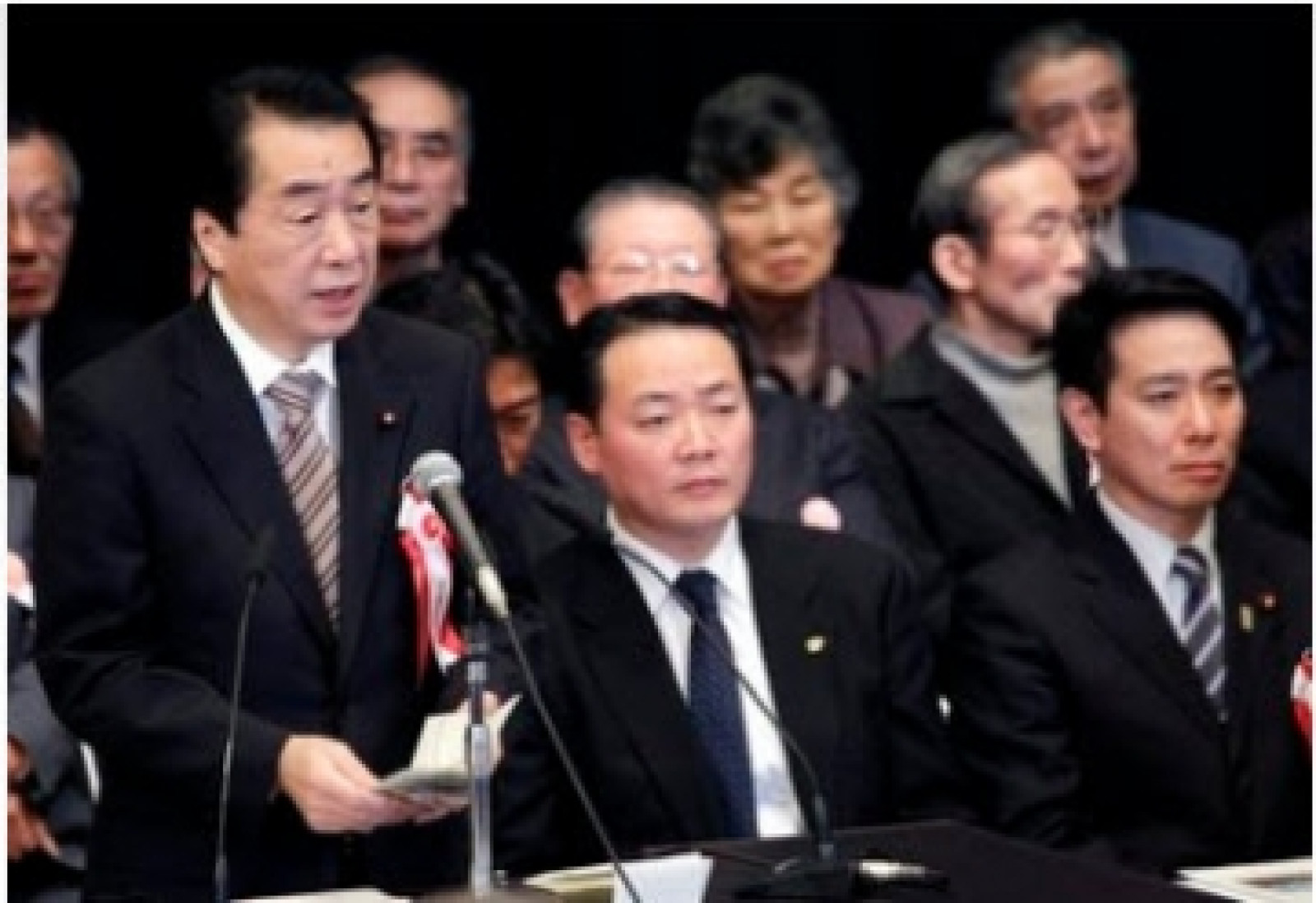
2. In Tokyo thousands went on a nationwide meeting for a return of Northern Territories. Naoto Kan had a speech and characterized Dmitry Medvedev's fall visit to disputed islands as an 'outrage'. All Japanese media regarded the statement of their government's head as 'unusually blunt'. This isn't surprising for a country where 'Stop kidding me!' is the gravest expression because calling somebody rude amounts to a slap in the face.
3. This year's meeting gathered a record number of people and was probably the most representative one over the past decade. Many members of the government and parliament turned out.
4. Moscow responded to Tokyo events in an equally blunt manner. Russian Foreign Minister Sergey Lavrov called the tone and expressions of Japanese Prime Minister 'undiplomatic' and accused the government of the insular nation of financing right-wing radical groups.
5. The pro-Kremlin youth movement, Nashi ('Ours'), didn't wait long to answer: there was a meeting held in response next to the walls of the Japanese Embassy in Moscow. However, people destroyed no flags and only spoke in support of the firm position of the Russian authorities on the issue of Kuril Islands.
What does the day of 7 February mean for the Japanese?
 This is an anniversary year for the Day of Northern Territories - it is the thirtieth celebration. The Japanese started holding large-scale protests for the first time at the peak of the Cold War - as early as in 1981. They were held to commemorate the Treatise of Trade and Borders signed by Russia and Japan on 7 February 1855. It is this document that Japan refers to as a basis to claim four Kuril Islands - Iturup, Kunashir, Shikotan and Khabomai. These territories became part of the USSR after the Second World War in which Japan was defeated. As is well known, Tokyo has been stubbornly pressing for a return of the islands and has made this its main condition for singing a peace treaty with Russia. How did the conflict evolve?
Top officials of the Country of the Rising Sun usually distanced themselves from participation in noisy events organized by different patriotic organizations. Moreover, in late 1990s - early 2000s, during the most significant thaw in Russian-Japanese relations, official Tokyo broadly hinted to Moscow that its own unflinching position on the issue of islands could be revised. However, recently ownership of Kuril Islands filled the minds of the bulk of the Japanese population anew. Passion around this 'eternal' subject started rapidly heating up.
* in February 2010, on the annual Day of Northern Territories the then Japanese Prime Minister Yukio Hatoyama made quite an angry speech against Russia. Like all other people in attendance, he demanded that the islands be returned forthwith;
* in September 2010 isolated misunderstandings in bilateral relationships were followed by a true crisis. On the eve of RF President Dmitri Medvedev's visit to the South Kuril Islands official Tokyo warned the Russian leader from such an 'ill-advised' step. Such statements unacceptable in diplomatic practice are a challenge in themselves. It's unheard-of: to advise the country's head against moving around its territory;
* naturally, D. Medvedev paid his visit which only caused powerless annoyance of Japanese Ministry of Foreign Affairs. It should be said that neither the last USSR President, nor two Russian Presidents (B. Yeltsin and V. Putin) visited the four disputed islands in order not to traumatize their neighbors. Yamato's country must have gotten used to this and, as a result, was shocked by D. Medvedev's behavior.
* the Russian party started 'building on this success' and top officials from Moscow became frequent visitors here. First the RF Minister of Regional Development, Viktor Basargin, went there with an inspection. Japanese Foreign Ministry only said it was 'very regrettable'. On 4 February 2011, on the eve of the Day of Northern Territories, the islands received Russian Minister of Defense, A. Serdiukov. Tokyo's diplomats again had to say how 'very regrettable' this fact was.
* The next stage involved the actual Day of Northern Territories which, as you already know, turned into a Day of Wrath.
What lies behind such a rigid position of Japanese government? First of all, problems within the country itself. Even after a reshuffle in the the cabinet in January this year, the rating of Naoto Kan's government remains only at 32.2%, while the rating of the ruling Democratic Party of Japan is at 22.7%. These are extremely poor figures for Japan. In addition, the recent great scandal related to financial abuses of the parliament member from the ruling party, Ichiro Ozawa, can further shake its position. The subject of Kuril Islands is only a great excuse for today's Japanese government to boost its popularity by playing on commonplace populism especially given that Tokyo maintains a very balanced position in official negotiations.
Who supports Russia and who supports Japan in this conflict?
Experts of the Masterforex-V Trading Academy point out that Japan is supported by the US on the issue of Kuril Islands. Philip Crowley, spokesman for the US State Department, said at a briefing on 1 November 2010 that the US was supporting Japan in the dispute that arose with Russia on Kuril Islands. He noted that 'the US really supports Japan on the issue that concerns Northern Territories'. He also added that Washington calls on Tokyo and Moscow to hold consultations and reach peaceful settlement of the conflict.
The international community is mainly of the opinion that Russia and Japan should resolve this dispute independently, through bilateral negotiations and consultations. Relationships between these 2 countries are sensitive in that there is no peace treaty between Japan and Russia with clearly defined state borders ratified by parliaments of both countries.
Why are Kuril Islands important for Russia?
Market Leader has repeatedly written that:
1. Giving up your territories in the modern world is very dangerous as this might trigger the domino effect in Europe and the world: most countries of the world will remember their own disputed territories and start claiming them from their neighbors.
2. Kuril Islands are extremely rich in bio resources (primarily, fish, clams, seaweed etc). Their annual production is estimated at 1.5-2 bn. dollars. It is also important that they are renewable.
3. Islands play a very important strategic role as they protect the continental part of the Russian coast and ensure free exit from the Sea of Okhotsk. In addition, as long as all Kuril Islands are part of Russia, the Sea of Okhotsk rich in fish will be treated as a land-locked sea.
4. Total reserves of Kuril Islands have been estimated at about 50 bn. dollars. This is only a possible minimum.
Market Leader suggests taking a survey for the situation to be assessed in a more unbiased manner: In your opinion, will Russian-Japanese relations continue aggravating?
• Yes, it will take a very long time to change this trend. We should respond in a calm and collected manner, by way of diplomacy
• Yes, but the Russian government should be more determined in action than today.
• No, the governments of the two countries will have more important issues that will need attention.
 Vlad Demochko



