Alex Bobrov

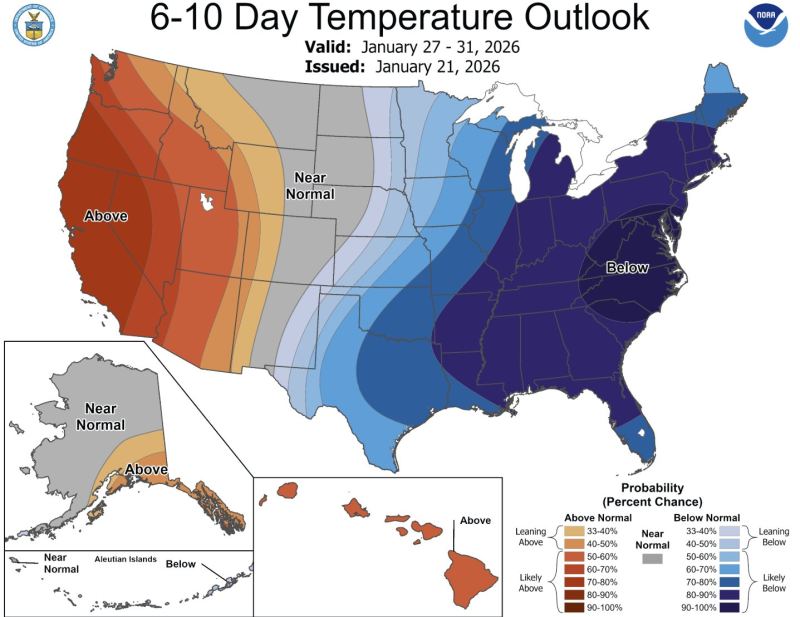
⬤ Natural gas futures in the U.S. have rocketed to their strongest level in more than three years as freezing temperatures grip central and eastern parts of the country. The Lower 48 states are set to experience 41 population-weighted heating degree days on January 24—the coldest and most widespread freeze since the same time last year. Weather forecasts show the eastern U.S. facing below-normal temperatures for the next 6–10 days, while western regions stay warmer than usual.
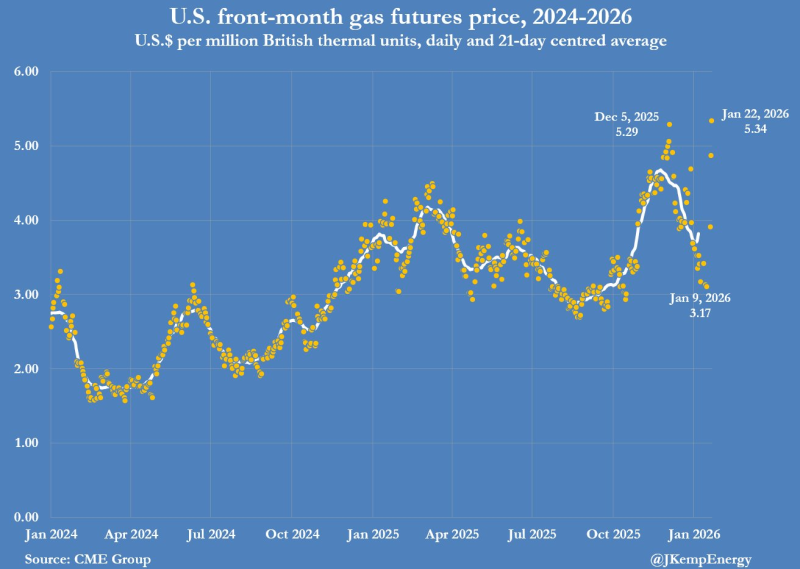
⬤ The cold snap has sent front-month U.S. gas futures well past the $5 per million British thermal units mark. Prices have climbed sharply from around $3.17 in early January to approximately $5.34 by January 22—the highest point in more than three years. The spike reflects the market's push to preserve gas stockpiles by shifting power generation from gas to coal during peak winter demand periods.
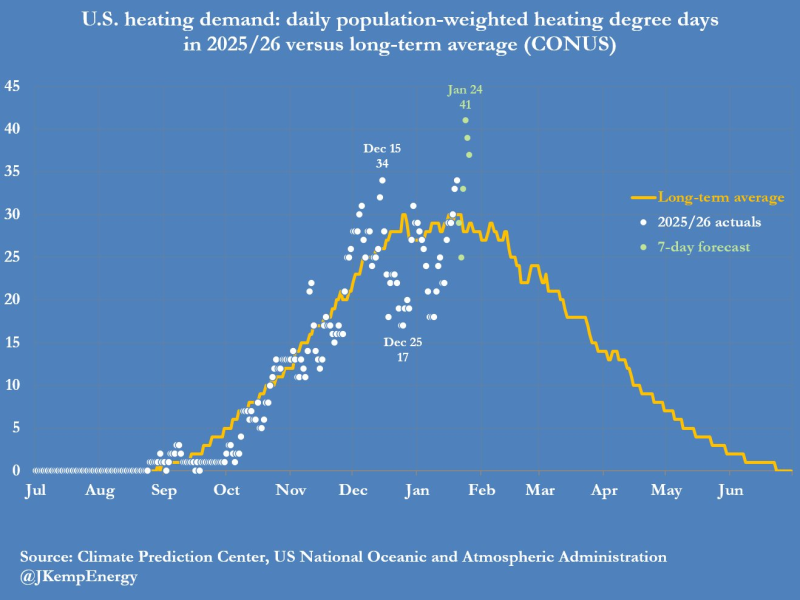
⬤ Forecasts indicate the Lower 48 states are expected to experience the most intense and widespread cold spell since the same period in 2025, highlighting just how unusual current conditions are for energy markets.
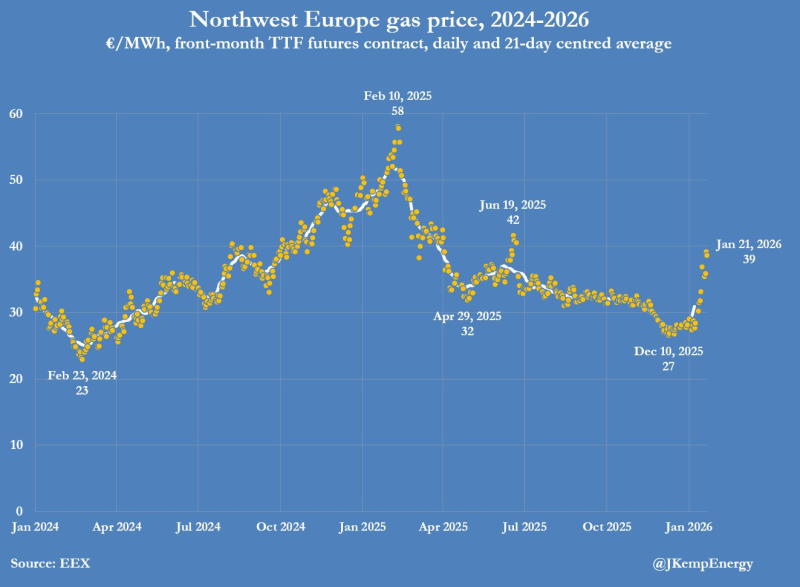
⬤ European gas prices have moved right alongside the U.S. rally. Front-month futures in Northwest Europe have surged over one-third since the start of the year, hitting a seven-month high near €39 per megawatt-hour. After sliding through December, European gas rebounded hard in January as colder weather returned and traders reassessed supply risks heading into the heart of winter.
⬤ The rally has been amplified by market positioning. Hedge funds had relatively light exposure in both U.S. and European gas contracts before the cold hit, making prices more sensitive to sudden weather shifts. The rush to cover short positions and rebuild bullish bets accelerated the price surge. Still, questions remain about whether the rally can hold once temperatures ease—future direction will depend heavily on how long the cold lasts and how well gas storage levels hold up through the rest of winter.
 Alex Bobrov