Alex Bobrov
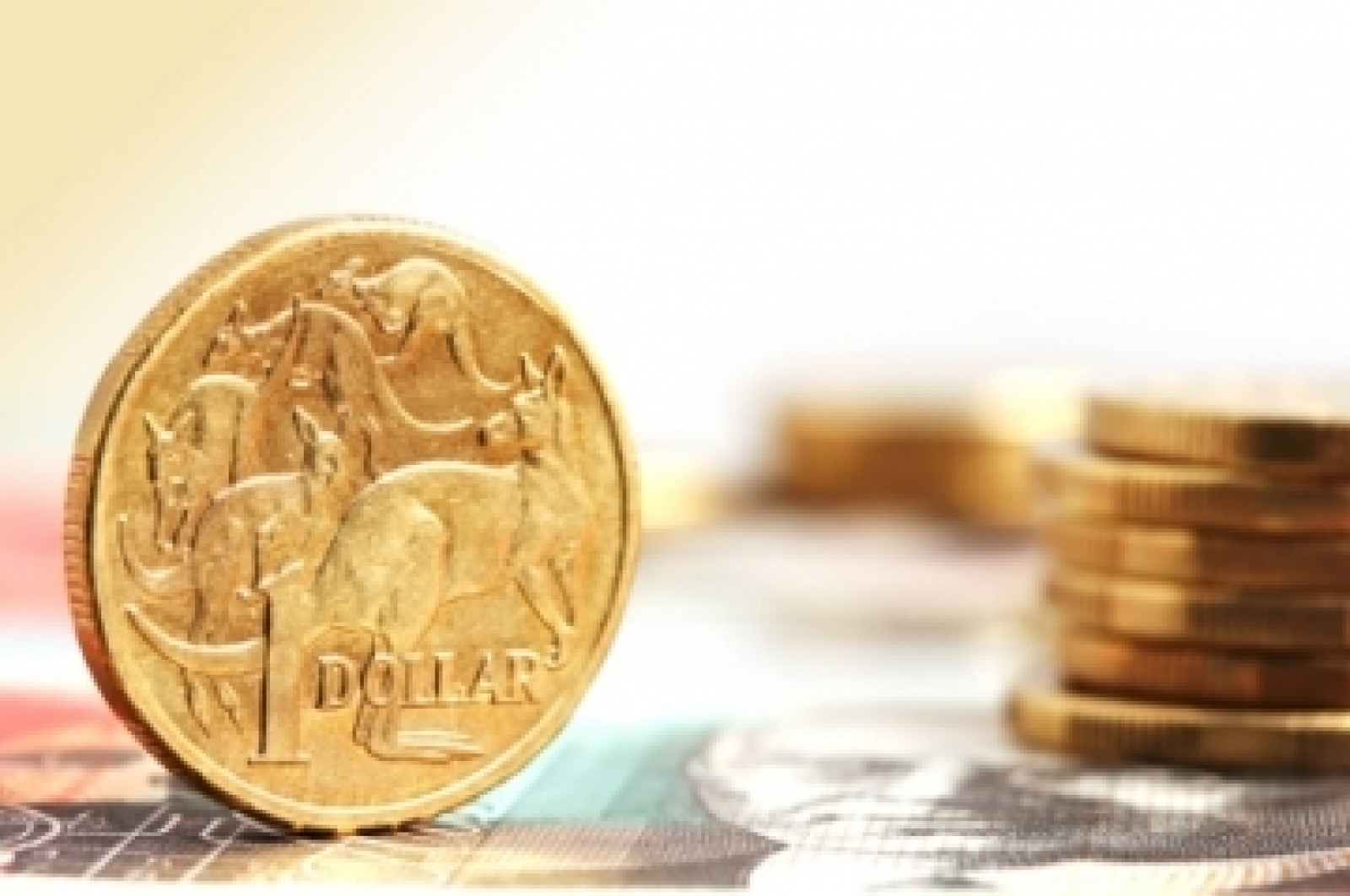
Today, on June 17th, the US Dollar gained 0,61% against its Australian counterpart after the RBA released its meeting minutes (the meeting took place on June 3rd). Therefore, at the beginning of the European trading session AUDUSD went down a bit.
Another bearish factor is the expectation that the Australian economic growth may slow down and underperform throughout the rest of the year. IF to consider the recent RBA meeting minutes, we can see there was little change in the international and local Australian economic conditions.
The pace of the economic growth shown by Australia's key trade partners is close the planned long-term figures. In particular, China's economic growth this year is slightly below the one seen in 2013. At this point, we can see boosing industrial production amid declining construction. At the same time, the Japanese GDP sa a rapid increase in Q1 2014 due to higher domestic demand in advance of sales tax hikes in April.
Meanwhile, according to the latest report, the US economy is growing at a moderate pace after a 0,1% decline in the GDP in Q1 2014 after a tough winter. After the eurozone economy spent 12 months in stagnation, now it seems to be recovering as well.
At the same time, the prices on iron ore are still going down, which is not a good thing for the Australian economy. Iron ore is Australia's biggest export commodity. The decline is caused by the economic slowdown in China coupled with higher iron ore production capacities. Since the beginning of 2014, the prices on iron ore have already dropped by 34%. So, lower investments in Australia's mining industry coupled with weaker demand for the non-mining products are expected to result in an economic slowdown in Australia while the next year is expected to be more positive for the economy.
Still, the Australian labor market is improving this year shooing after poor figures in 2013.
However, experts do not believe that the current rate of employment growth will hold true in the coming months. The RBA is hard to figure out how efficient are low interest rates in supporting consumer demand and making up for the mining investment slowdown.
Experts believe that the Australian Dollar is overpriced historically, which is currently hindering the economic growth. The RBA thinks is that the Aussie is 5% overpriced against the currency basket. The central bank is planning verbal interventions in order to devalue the national currency.
The AUD index, which is the indicator of Australia' commodity export prices, has been going down in value for 4 months by now, thereby reflecting moderate economic growth in China coupled with lower commodity prices worldwide.
Despite a rapid increase in the Australian GDP in Q1 2014, the Australian economy is expected to underperform through the rest of the year, followed by more intensive growth in 2015 and 2016.
The inflation forecast is at 2%. The RBA assumes that the current monetary policy under the existing economic conditions will be efficient for some time. The benchmark interest rate is unchanged at 2,5%. Market participants assume that the RBA will leave the interest rate low until the end of 2014 in order to stimulate job creation and make up for the negative outcome caused by lower investments in the country's mining sector.
The Australian Dollar lost 14% of its value in 2013. Since February 2014, the Aussie has gained 7,3%. After the RB meeting minutes release, the Aussie is trading around 0,9350.
According to the trading experts working for Masterforex-V Academy, the Aussie is likely to go further down to the 0,9335 support, a break below which will give way to 0,9318.
A mid-term bullish reaction of AUDUSD is probable as well. If this is the case, the key levels of resistance to watch are 0,9352 and 0,9373.
According to the Binary Option Department of Masterforex-V Academy, if there is a mere downtrend, it is recommended to buy put options on bullish reactions. Such trades can make up to 70% as a ROI of the long-term scenarioa on the H1 chart manifests itself. The lifetime of the option is under 3 hours.

 Alex Bobrov