International experts are trying to evaluate the situation in Italy. Some of them are convinced that the EU is not going to save the Italian populists. For those of you who don't know the details, in October, the European Commission rejected the draft budget devised by the new Italian government. This means that the draft budget needs to be improved in order to approved.
With that being said, the experts say that this incident indicates a fundamental conflict inside the European Union, which may well end up with a disaster for Italy and a deep crisis for the Eurozone and the EU. Chances are, the situation around Italy may obscure the Greek bailout and even the worst-case Brexit scenario (according to which, Great Britain quits the EU without signing a major agreement).
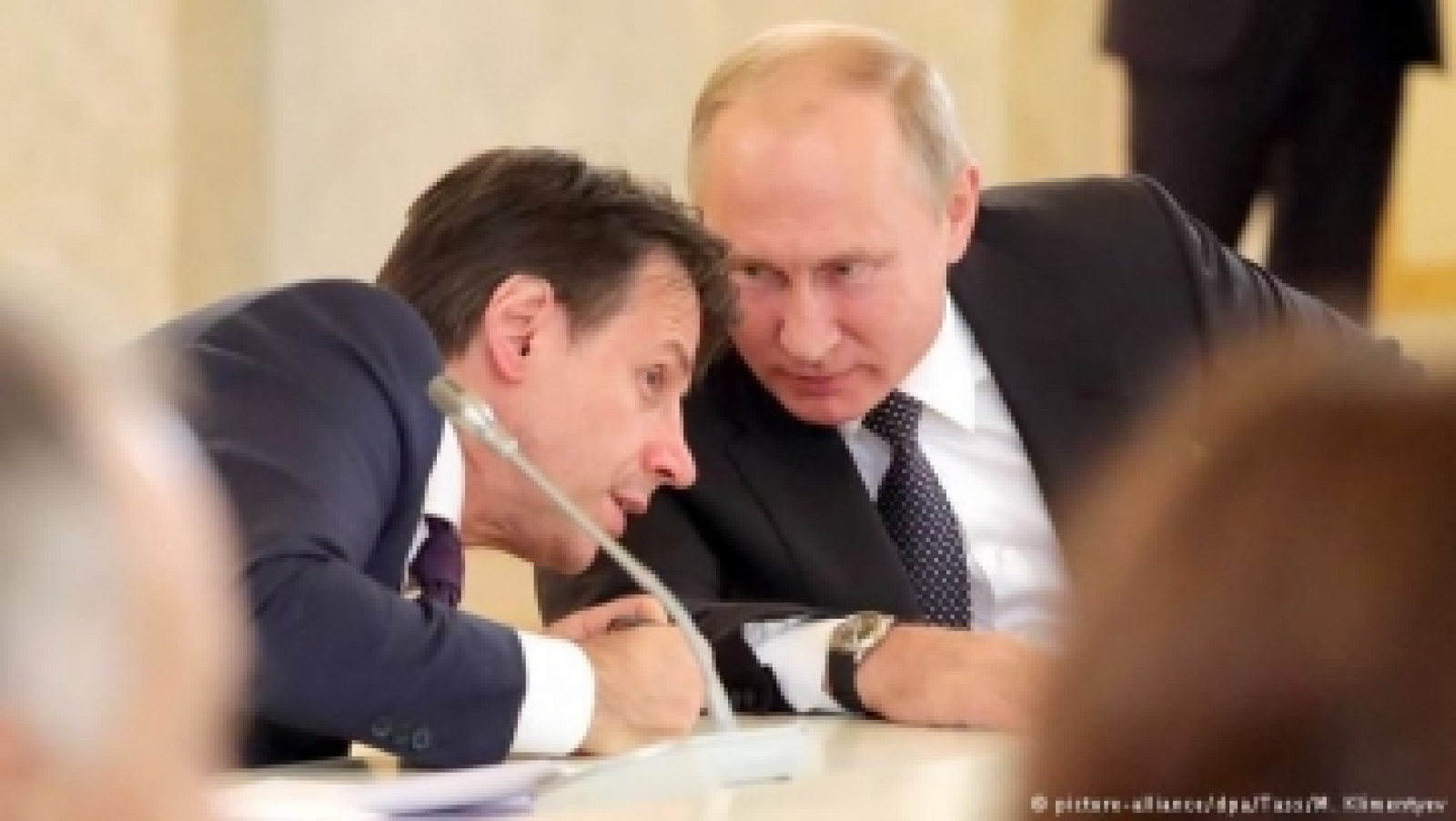
Which is more interesting, Russia may get involved in a potentially dangerous situation. At this point, Moscow seems to be trying to create close ties with the new Italian government. In October alone, Moscow hosted the new Italian Minister of Foreign Affairs, the Vice Prime Minister and even the Prime Minister. At the same time, Prime Minister Giuseppe Conte started talking about the possibility of emitting Italian T-bonds, which seems to be the key point of interest in the entire situation.
During the press conference with Vladimir Putin, he assured the media that he hadn't come to Russia to ask the Russian President to buy Italian bonds. But at the same time, the Russian leader hinted that he ws not going to limit the National Prosperity Fund in its search for new investments. In other words, the fund may well start loading up on those bonds.
Italian Crisis May Cause Major Consequences
In case you don't know, the new Italian government created on June 1, 2018, is considered to be a populistic one. As a rule, populists ignore fundamental and complex problems or just promise the electorate to work out a simple yet fast and efficient solution to them in the future. Some of the key problems for Italy is a really huge public debt, which is over 2,3 trillion euros. This is the consequence of living beyond their means on the national level for many years. As a result, the debt is now equal to 130% of the national GDP. Only Greece can beat this with an even bigger debt - 180% of the national GDP.
At the same time, Brussels' requirements to avoid exceeding the threshold of 60% of the national GDP is ignored by many EU and Eurozone states. However, most of those governments are trying to reduce the debt. The European Commission is responsible for supervising those governments in terms of complying with the signed obligations. In particular the EC agreed with the previous Italian government that the Italian budget deficit would not exceed 0,8% of the GDP. The draft budget devised by the new government implies 2.4% of the GDP. So, the government is planning to borrow 25 billion euros more than agreed initially. So, the experts belive this is a clear step indicating that Rome is reluctant to follow the Eu scenario aimed at curing Italy's economy and financial system.
Given these facts, there's nothing to be surprised about the EC's decision to reject the draft budget. Still, the Italian government claims they are not going to change their mind. So, we are likely to see another round of confrontations between Brussels and Rome. Italy may end up getting fined for violating the agreements and paying several billion euros for that.
As for Russia, the Kremlin is probably interested in the opportunity to participate in something that may distabilize the political and economic situation in the European Union. However, neither Russia no the EU or the ECB have enough spare funds to bail out Italy. Apparently Mario Draghi and his ECB cannot buy junk Italian bonds forever while the new Italian government keeps openly ignoring the EU's requirements.
Anyways, there won't be anything like the Greek bailout this time. So, if the Italian government keeps playing dangerous games, Italy may end up defaulting on its debt, which in its turn will result in a major crisis for Italy, Russia and the EU.