
 Alex Borzak
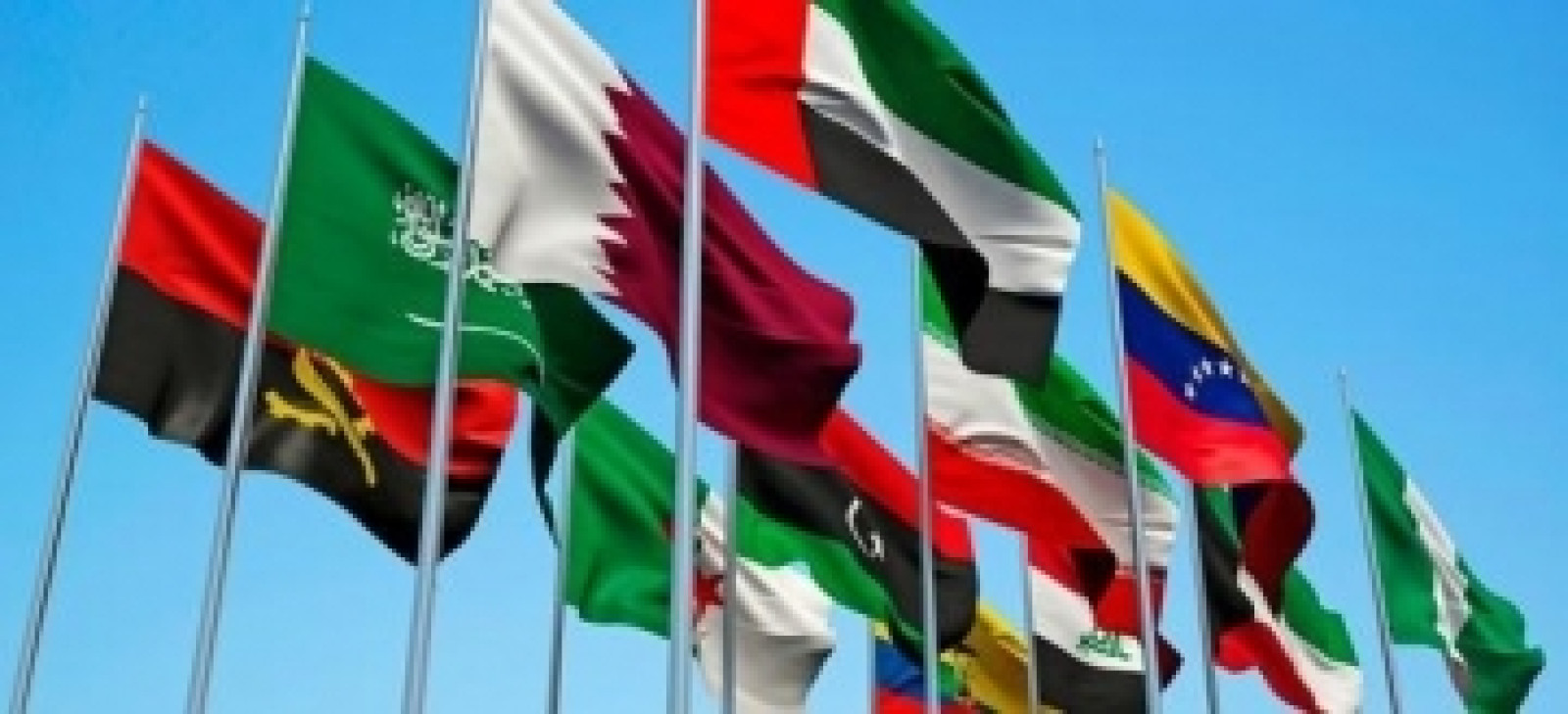
According to some experts, the failure of the recent meeting of representatives from oil-producing countries in Doha could have been orchestrated. The “Market Leader” has delved into the issue in order to understand who could have staged such performance in the capital of Qatar.
The "Independent Newspaper" supposes that the recent meeting in Doha could have been orchestrated, as from the very beginning neither Saudi Arabia, nor Iran strove to stop the dumping war. There exist several theories of what happened in the capital of Qatar. Particularly, according to the first theory, Saudi Arabians simply wanted to demonstratively slam the door, thus instigating new drop of oil quotations. According to the second theory, Teheran has decided to make financial and reputational strikes at Riyadh. It is possible that both countries tried to make the price for raw material drop to below 20 dollars. Experts claim that there is another, third theory, according to which all exporters have simply played the performance, roles in which have been outlined beforehand.
When the meeting was over, officials and experts started predicting possible consequences of the failed negotiations on petroleum. The minister of energy of Russia Aleksander Novak has highlighted that the Russian Federation will not experience any problems due to the failed result of the meeting in the capital of Qatar. Analysts of Goldman Sachs predict that OPEC countries are unlikely to accumulate the volume of oil recovery in the nearest future. Moreover, in the 2nd quarter the market of "black gold" may even experience a slight deficit of raw material. According to experts of JBC Energy, unsuccessful negotiations in Doha will not influence the market in any way – there will not happen any considerable price drop if oil is not thrown on fire by discussions of the summit outcome.

At the same time, there exist less bright predictions. For example, specialists of Barclays suppose that in the 2nd quarter the price of one barrel of Brent will drop to about 36 dollars. They highlight that failure of negotiations in Qatari capital has been another proof to investors: today OPEC cannot stabilize the situation at oil market. According to MarketWatch data, at this point many analysts are reconsidering their forecasts: in particular, they do not exclude the possibility of oil quotations going back to 30 dollars already in the nearest future.
In his interview to TASS information agency Sergei Glazyev, advisor of the president of RF, has stated that no matter what further actions of OPEC are, growth of oil consumption as energy carrier is expected neither now, nor in the nearest future. At the same time, he has appealed against overstating the value of cartel agreements, for today the world is transferring from "black gold" to renewable sources of energy.
Some Countries Change Their Positions Right Before the Meeting – Novak
According to Aleksander Novak, it took 2 months to prepare an agreement about freezing oil recovery, but before the very beginning of the meeting in Doha several OPEC countries have suddenly changed their previous positions. Particularly, they have made a demand for this agreement to be performed by all members of the cartel, as well as large exporters of raw materials - non-OPEC members, which have not been present in Qatar: to all appearances, meaning Columbia and Norway. The minister has explained that these requirements have been made by representatives of Qatar, Kuwait, UAE, and Saudi Arabia.
Bearing in mind the abovementioned theories of the failure of negotiations, it appears that Saudi Arabians could have striven to crash of quotations to below 20 dollars in order to drive out their rivals from the market. Speaking about the second theory, one can assume that Iran wants to initiate dumping war, as it is the only OPEC country, which does not lose anything if prices for raw material drop. For a long time Iran has been put under sanctions, and today, when limitations have been removed, by supplying its "black gold" for export, though at low prices, it still gains in comparison to the period under sanctions. Iranian representative has failed to come to the capital of Qatar – Teheran thus shows that it will not take orders from Riyadh.
According to Nikita Isaev, the head of Institute of Economics, the situation with negotiations in Doha truly seems orchestrated. He reminds that at first everything went smoothly, and there were no problems: key points have been agreed, as well as readiness to sign the agreement without Teheran. However, then representatives of the Persian Gulf countries decided to change terms, besides, making new ones knowingly impossible. At the same time, Iranian position has not been a secret to anyone for a long time: Teheran is ready to sell its oil 10 percent cheaper than the market price in order to return old volumes of its export supplies. The expert supposes that actions of Saudi Arabia in Qatar have been obviously planned earlier – Saudi Arabians wanted to compromise petroleum agreement, although Riyadh is not planning to start a new stage of price war anyway.
 Alex Borzak



