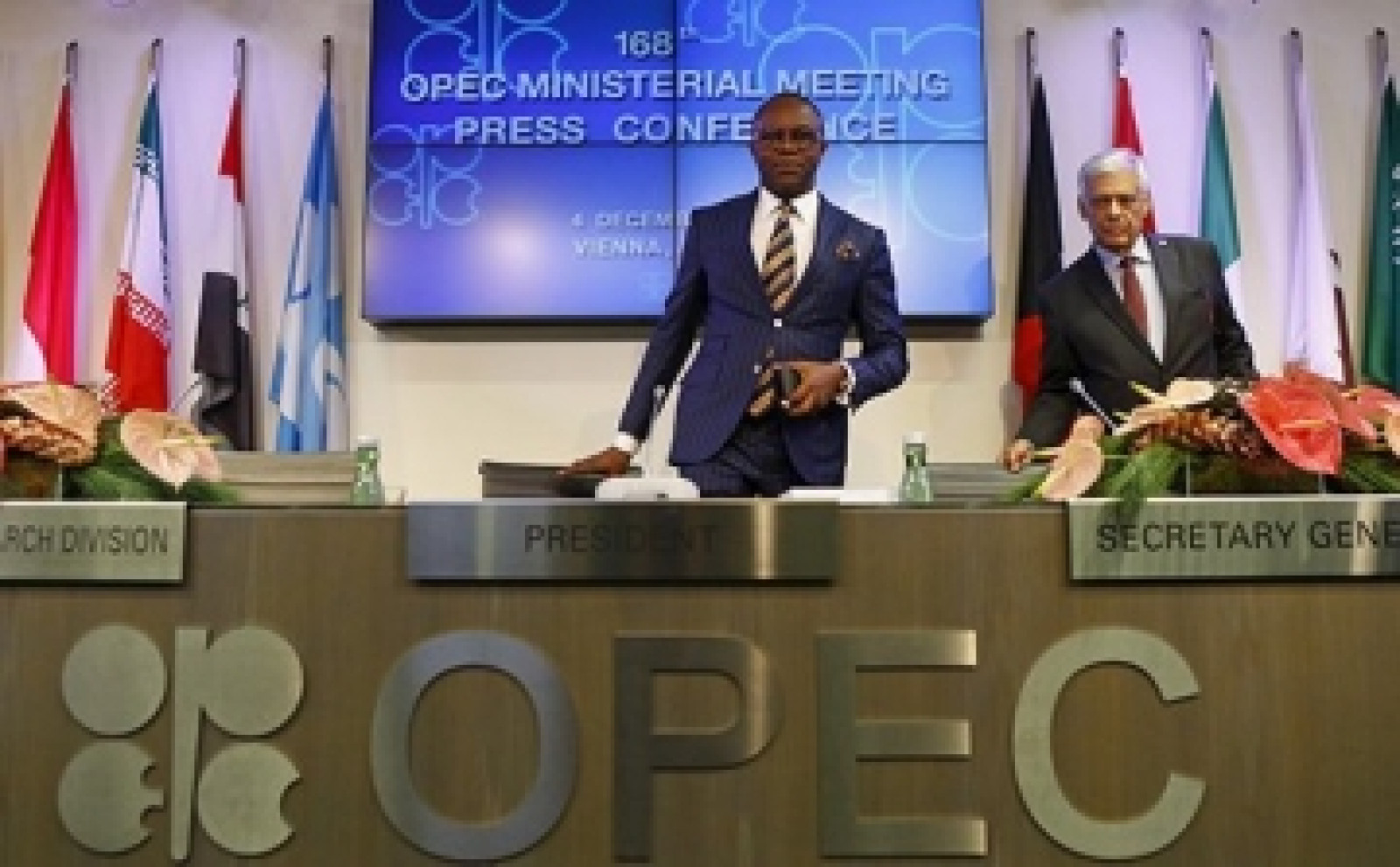
The representatives of several OPEC nations addressed the cartel's leaders to conducted another emergency summit in the near future. During the recent energy conference in Abu Dhabi, Emmanuel Ibe Kachikwu - Nigeria Oil Minister OPEC President – told the reporters that OPEC may discuss possible changes in the cartel’s policies during the forthcoming meeting in March 2016.
It should be noted that during the latest OPEC summit held on December 4, 2015, the cartel decided to abstain from cutting its production quotas, thereby leaving them at 30 million barrels a day. The quotas have remained unchanged since 2011.
At this point, nobody denies the fact that the major factor pressing oil prices is the never-ending economic slowdown in China, which is still making the local stock market and national currency devalue at an unprecedented rate. The thing is that China is still the world’s major importer and consumer of crude oil. Therefore, it generates the biggest share of the global demand for crude oil, As the economy goes down, China doesn’t need that much oil to sustain its economy anymore, especially as it is getting reoriented from exports to domestic consumption.

At the same time, decreasing oil prices keep on affecting commodity currencies like the Russian Ruble. At this point, the USDRUB is over 77, which is the first time the price has broken this psychological level since 2014.
It also interesting to note that OPEC is still optimistic on the near-term fate of crude oil. In particular, the recent OPEC report released in late 2015 includes the cartel’s oil prediction which implies that oil prices are going to advance by $5 per barrel each year. By 2020, the prices are expected to rich the $80/b level.
At the same time, the oil experts working for Standard Chartered have made the lost pessimistic oil forecast, which says that oil prices may crash all the way down just $10 per barrel, which is definitely going to be a nightmare for oil-exporting nations once the forecast manifests itself. At the same time, Masterofrex-V Academy reports that a number of major Western banks have downgraded their oil forecasts for 2016. The list includes Merill Lynch, Societe Generalе, Barclays, Macquarie, and Bank of America. In particular, Barclays cut the forecast for Brent and WTI down to $37/b from $60/b and $56/b respectively.
It is also interesting to note that despite having the official quotas unchanged at 30 million barrels a day, OPEC actually increased its oil production up to the highest point in 3 years. This happened mainly due to higher oil production in Iraq. Yet, the production is going to get even higher since Iran is going to come back to the oil market as a major player after the USA finally canceled the sanctions. With that being said, we should probably expect even greater pressure on oil prices in the near future.