
 Tatsiana Ketrar
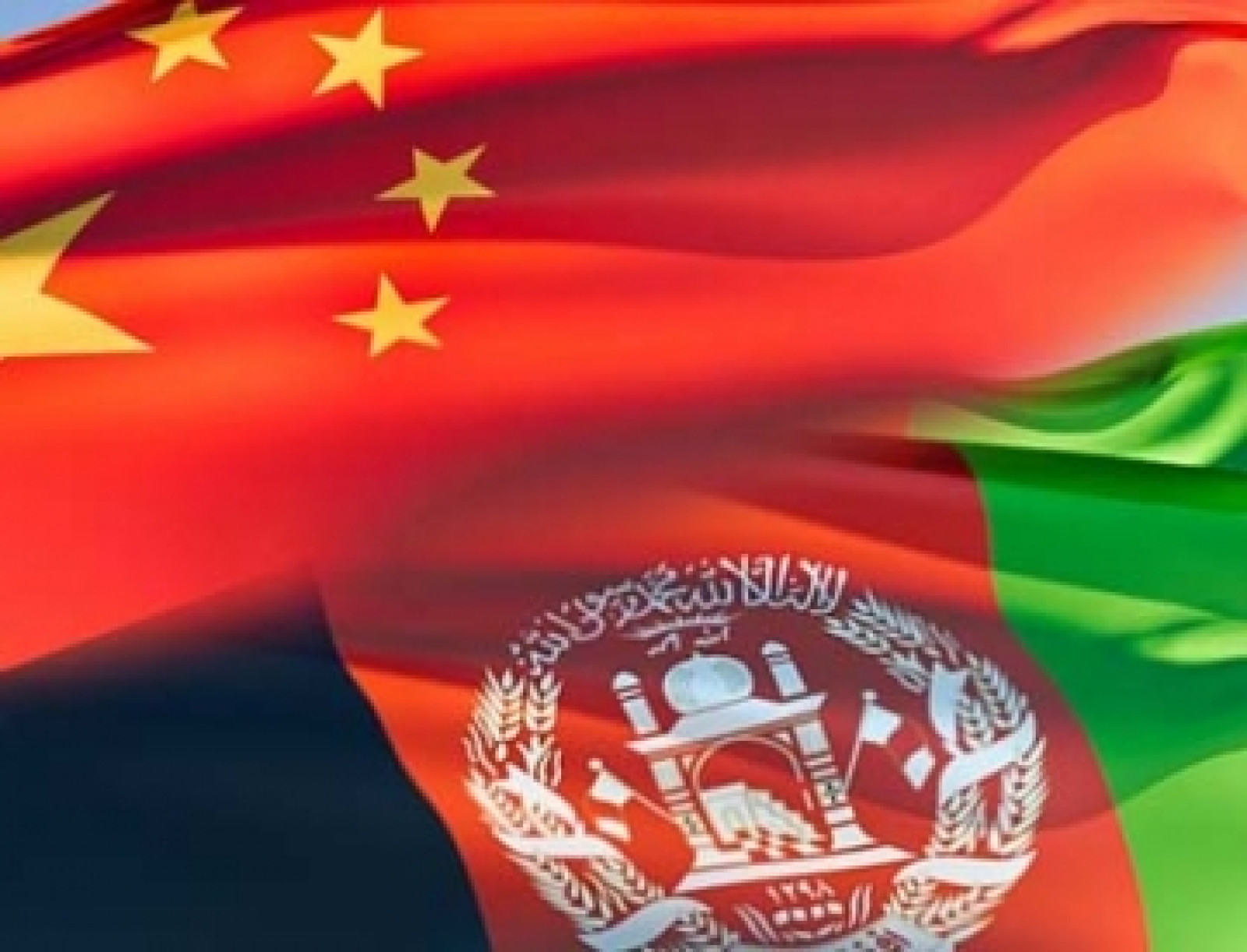
They say none will ever manage to conquer Afghanistan completely… Russia and the USA can confirm that. After the USA withdraws its troops from Afghanistan in 2014, this statement may become even more evident.
Will any country dare go to Afghanistan after two superpowers failed to conquer it?
Who Can Be Interested In Afghanistan?
According to Eugene Olkhovsky, ’s leading expert, there seems to be an “thrill-seeker” who is interested in Afghanistan. It is China. Sometimes it seems like all superpowers should challenge Afghanistan to test their potential.
· Alexander of Macedonia found himself in Afghanistan when trying to reach Samarkand (present-day Uzbekistan).
· The British Empire arranged 3 military campaigns against Afghanistan in effort to secure the northern borders of India.
· The Russian Empire was wise enough to abstain from going deep into Afghanistan’s territory.
· The USSR intervened in Afghanistan in 1979 in order to prevent the US troops from doing the same.
· The USA intervened in Afghanistan in order to retaliate for the 9/11 terrorist attacks.
· The only army that had no difficulty conquering Afghanistan was Genghis Khan’s army.
Why Chinese?
So far, China has been wise enough to stay away from Afghanistan. However, big money can change the situation.
In June 2012, Hu Jintao, President of the People's Republic of China, and Hamid Karzai, President of Afghanistan, announced a new stage in strategic cooperation between the two countries during a meeting in Beijing.
Experts explain China’s decision by 2 factors:
· To prevent the Taliban from spreading its influence over the Uighurs, who live in the Xinjiang Uyghur Autonomous Region in the People's Republic of China.
· To secure its investments in Afghanistan.
In September, a top member of the Chinese Communist Party visited Afghanistan. This was the first official visit to Afghanistan in 46 years!
China’s Investments
So far, China has opened over 30 big-scale investment projects in the unstable Central-Asian region.
The biggest one is the Ainak Copper Mine (Logar Province, Afghanistan) – 280 million tons of ore – currently developed by Metallurgical Corporation of China. The company invested over $ 3,5bn in this project.
Moreover, the Chinese metallurgical giant is planning to build a railway network and an electric power plant (400 megawatt).
At the same time, China National Petroleum Corp. has got the right to explore and develop the oil and gas fields located in the Amu-Darya Basin. The company also promised to build an oil refinery within 3 years.
Moreover, China is planning to build an entire infrastructure in Afghanistan – highways, bridges, schools, hospitals etc. Obviously, this will require the presence of multiple Chinese experts in numerous fields.
Chinese Yuan
According to , the Chinese Yuan wants to dominate foreign markets. New markets mean a stronger national currency. However, a major change in the Chinese Yuan market suggests that China will soon suspend the strengthening of its national currency despite the fact that the USA keep exerting pressure on China over the issue.
Speculators have already made USDCNY go down to the lower bottom of the Daily price range.
The USDCNY exchange rate is trading within the price range set by the Chinese authorities. According to MIG Bank (a top member of ’s rating of Forex brokers ), the People’s Bank of China determines the daily exchange rate. Speculators can make it deviate by 0.5%.

Some experts say that after the NATO withdraws its troops from Afghanistan, the security and reliability of Chinese investments will be in jeopardy.
However, Beijing declined the NATO’s call to donate $4bn for the development of the Afghan army. This looks quite logical. Why helping adversaries make charity gestures? The ice has been broken. China has signed an agreement to train and support the Afghan police even though the NATO hasn’t still left Afghanistan.
We can only guess what level the bilateral cooperation between Afghanistan and China will reach when the NATO has withdrawn its troops in 2014.
 Tatsiana Ketrar



