Alex Bobrov
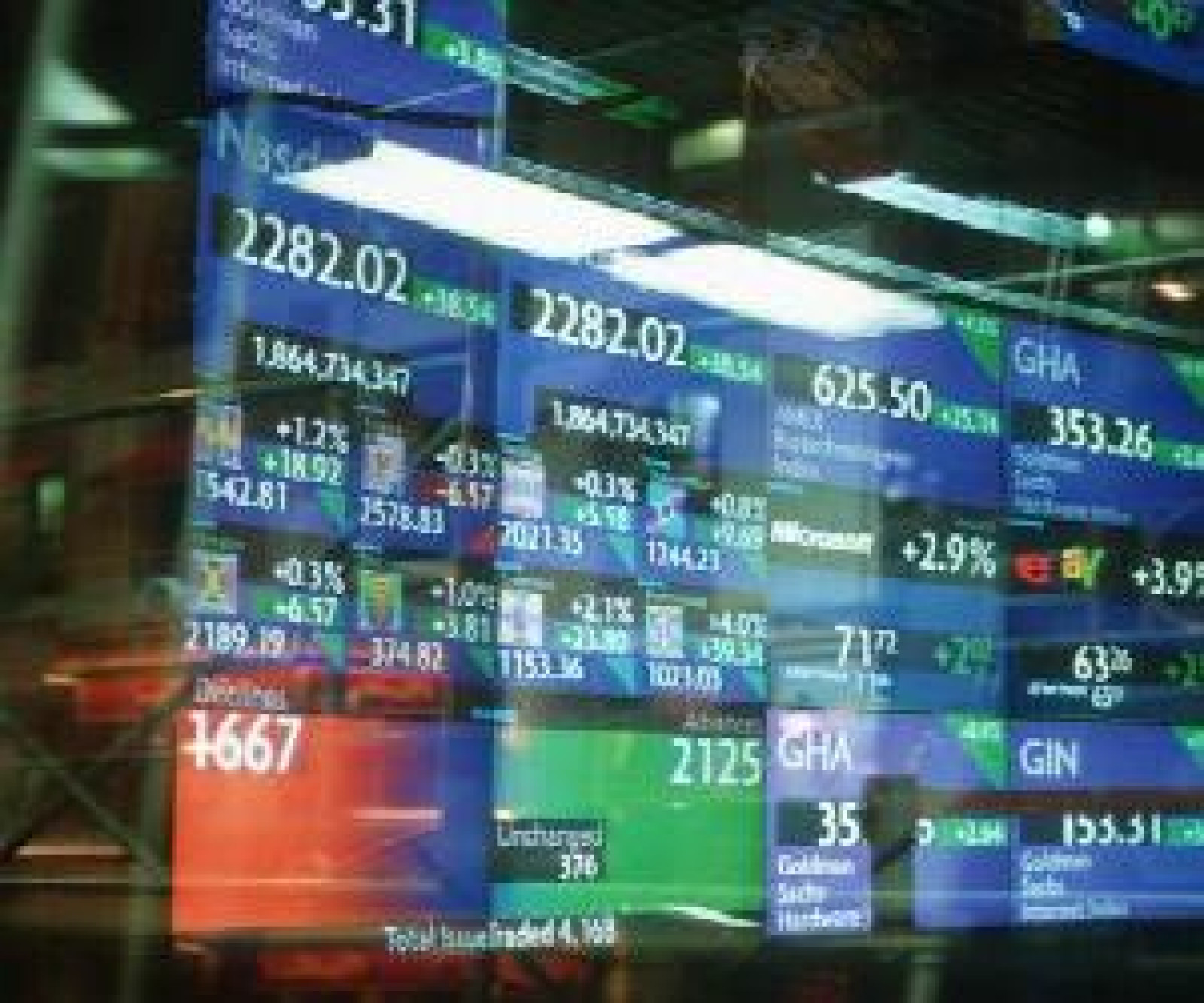
A couple of days ago the European Commission decided to provide Greece with another substantial loan - €130B. Some optimists assume that this is the very beginning of an economic recovery, that the eurozone crisis is nearly over. Moreover, the German Parliament approved Angela Merkel’s efforts to support Greece, which later caused an euphoria in European stock markets: On Feb 28th DAX and CAC 40 gained 0,3 % shortly after the opening, FTSE-100 gained 0.2%.
European Optimism: Greek Problems Resolved?
It turns out that the German Parliament didn’t approve any bills. It just issued a general resolution approving the government’s actions. The reason is that it is still unclear how much money Greece will eventually need in the coming years.
It was impossible to postpone the decision because without the urgent loan Greece would have defaulted on its debt after failing to redeem its T-bonds. Until March 20th Athens should pay back €14B (i.e. to redeem those bonds that will expire in late March). Theoretically, Athens could do without the second tranche because Greece received only €73B out of €110B of the first loan. The remaining part of the loan would cover the expenses.
The experts of assume that the eurozone crisis is far from being resolved. There are still too many obstacles on the way to recovery.
Will Greece preserve its Eurozone Membership?
The major threat to Greece’s eurozone membership is inside Greece. First of all, there is no nationwide consensus. While the Greek authorities were signing the austerity agreement needed to get another loan from Brussels, common Greeks, labor unions, small- and mid-scale businessmen were holding anti-austerity protests and riots.
Another factor is the early parliamentary election scheduled for April. The Greece is on the verge of major political changes. Whom do you think the Greeks vote for?
Tourism is one of the locomotives of the Greek economy. It accounts for 20% of the country’s GDP. Some optimists say that in 2011 the amount of foreign tourists visiting Greece increased by 10%. 14.2M tourists allowed the Greek tourist industry to attract €7.6B. However, there is another aspect. According to the Association of Greek Tourism Enterprises, during the period of mass protests, the tourist inflow decreased by 75%.Moreover, it is necessary to take into account the fact that the overall tourist inflow increased mainly at the expense of Russians (+58%). However, it is Germans and French who contribute to the gains of Greece’s tourist industry.
And finally, it is hard to believe those who once failed to keep their word. As we know, the Greek authorities failed to carry out their obligations given in may 2010 when Greece received the first loan. Will the Greek manage to keep their word given in Brussels? Wolfgang Schäuble, the German Minister of Finance, assumes that Greece well may borrow more money.
What awaits the eurozone?
The Greek debt crisis has already spread over the eurozone, experts say:
Portugal , Italy and Spain are on the verge of default as well. Austria, Netherlands and Belgium may soon join the company. Even France, the eurozone’s 2nd strongest economy, is currently “in the red zone”. Some experts anticipate an increase in France’s public debt and unemployment, which will affect the quality of life in this country. In Q4 2011 the GDP reached the zero level. The rate of unemployment doubled in 2011.
In the meantime, more and more Portuguese politicians want to follow in Greece’s steps, i.e. to ask the EU for another substantial loan in order to make up for the negative effect of the implemented austerity measures.
Eurostat analysts expect the eurozone to fall into recession in 2012. The eurozone’s GDP is expected to decline by 0.3% (even though 6 month ago the experts anticipated a 0.5% increase).
Moreover, one should keep in mind that Europe is a significant part of the world (in terms of geopolitics, economy etc.). The situation around the world cannot but influence the processes within the EU and eurozone and vice versa. In order to replenish its stabilization funds, Europe needs external financing. China is still indecisive, probably trying to benefit from the situation and to get some extra privileges. The G20 emerging economies are also determined to save Europe but they also want to get something in return. The USA helps Europe only with advice.
The EU got into some shady political plays initiated by the USA. It supported the oil embargo against Iran, which will eventually have a negative impact on the European economy. The UK has always been a devoted ally of the USA. But why did other EU powers (like France) support the embargo? Don’t they see that the Southern economies, including Greece, Italy and Spain , will be seriously affected? Iranian oil used to account for a substantial share of their hydrocarbon import.
EURUSD:
According to the analytic team of , EURUSD finished a 5-wave pattern (А/shortened С Н1). Then wave А/В broke the MF sloping channel. The upward scenario suggests a wave-level increase. Once there is a break below 1.3462, the price will start a new wave A(C )/C.

Market Leader and would appreciate if you could participate in a survey. Please, visit the Academy’s forum for traders and investors and answer the following question:
Is the eurozone crisis nearly over?
 Alex Bobrov