Serj Panchuk
A country’s level of corruption is one of the main factors determining its investment attractiveness. No wise investor would probably invest in the economy of a highly-corrupted country. These days, when the entire world is on the verge of falling into the abyss of another major crisis, attracting foreign investment has become a matter of life and death for numerous economies around the globe.
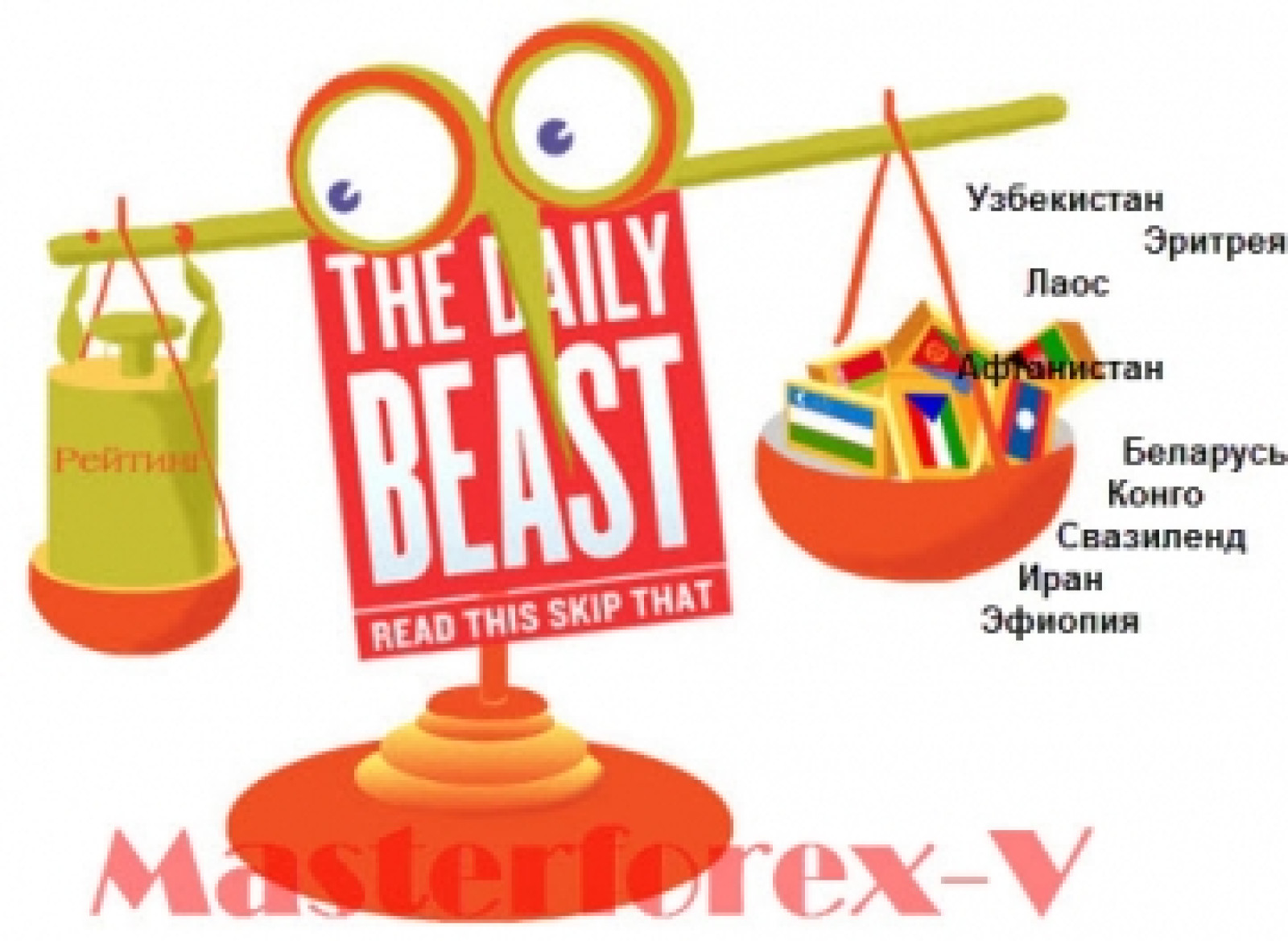
Strange as it may seem but the more critical the global economic situation is, the more ratings are published. Not so long ago Western mass media (like The Guardian, The Financial Times, The New York Times, Forbes) reported that The Daily Beast had published its own international corruption rating. In other words, we can witness another attempt to divide the world into good and bad “guys”, i.e. corrupted countries and those that are corruption-free, democratic and attractive for investors.
How important are “corruption” ratings for investors?
According to Eugene Olkhovsky, ’s leading expert, it is fairly easy to understand how can such ratings affect a country’s investment attractiveness.
Most investors pay attention to different ratings when deciding to invest in a foreign economy. By the way, more and more experts start questioning the objectivity of such ratings. Market Leader tries to be as objective as possible in highlighting any information that can be important to investors. It was noticed that when a certain rating irritates influential countries, they initiate publication bans and numerous investigations. It is sufficient to recollect, how the EU authorities started questioning the objectivity of international rating agencies after they started downgrading the credit ratings of European countries.
According to the experts of , when it comes to making any international rating, it should be unbiased, with transparent methodology and distinct criteria. Otherwise, a rating can quickly turn into a weapon of information warfare.
The Daily Beast’s rating
First of all, the rating is mainly based on Corruption Perceptions Index 2011 by Transparency International (for more details, please, also read Transparency International: Corruption Perception Index 2011 - Valuable Info For Investors Or Weapons Of Manipulating Public Opinion?)
The rating was made by The Daily Beast (a popular US edition), which doesn’t specialize in corruption ratings. Apart from Corruption Perceptions Index 2011 by Transparency International, the Daily Beast used Freedom House’s report on the freedom of the press and the latest data provided by the World Bank.
Transparency International is the only organization that makes scientifically-based corruption reports. It has a distinct definition of what corruption is while its index is based on a number of criteria. For more information, please, visit the official website.
However, The Daily Beast decided to expand Transparency International’s list of criteria, thus adding political rights, social freedoms and other irrelevant criteria.
The question arises: What is the object of the given research? Corruption or political and social freedoms? Obviously, these are different notions. Moreover, they contradict each other. There is very little or no corruption in totalitarian countries while corruption flourishes in those countries that make first democratic steps. It seems like we have a mere profanation here (I mean The Daily beast’s rating).
Uzbekistan is number 1, Belarus is number 6. Why?
This is unclear. The Daily Beast’s rating reveals only the world’s 20 Most Corrupt Countries (unlike TI’s Corruption Perceptions Index).
The Daily Beast’s rating looks as follows:
1. Uzbekistan (89,6 out 100)
2. Eritrea (87,8 out 100)
3. Laos (87,8 out 100)
4. Afghanistan (86,3 out 100)
5. Equatorial Guinea (84,2 out 100)
6. Belarus (83 out 100)
7. Congo (82,5 out 100)
8. Swaziland (81,3 out 100)
9. Iran (79,1 out 100)
10. Ethiopia (78,5 out 100)
11. Chad (78,2 out 100)
12. Syria (76,8 out 100)
13. Cote d’Ivoire (76,4 out 100)
14. Venezuela (76 out 100)
15. Iraq (75,5 out 100)
16. Yemen (73,9 out 100)
17. Burundi (73,6 out 100)
18. Angola (72,3 out 100)
19. Cambodia (71,9 out 100)
20. Haiti (69,9 out 100).
There are some major changes in comparison with TI’s Corruption Perceptions Index 2011.
According to Transparency International’s index, Uzbekistan was number 5. The daily beast made it the world’s most corrupted country, thus eliminating Somali (by the way, Somali wasn’t included in the rating for some strange reasons). North Korea and Turkmenistan were also eliminated from the list (they were number 2 and 6 in TI’s rating).
It is not accidental that Iran is in the same list of highly-corrupted countries, especially amid the current confrontation between Iran and the West (the Strait of Hormuz, the oil embargo, various sanctions, Iran’s controversial nuclear program.)
The most shocking an unexpected change is that Belarus suddenly rallied from number 39 (Transparency international) up to number 6 (The Daily Beast). What on earth happened in Belarus that forced The Daily Beast into making such changes?
Dmitriy Frantsevich, the head of the Belarusian Association of Traders and Investors under , is sure that even despite the fact that the USA and the EU keep questioning the Belarusian democracy, Belarus is not as corrupted as the Daily Beast thinks. In fact, Belarus is less corrupted that some other states of the former USSR. Anyway, it cannot be the world’s 6th most corrupted country.
Corruption is a delicate issue, which needs a delicate approach. However, The Daily Beast seems to be manipulating the data taken from other competent sources to pursue some shady goals (probably some orders from above). The Daily Beast’s rating looks biased and hardly deserves investors’ attention.
Market Leader and would appreciate if you could participate in a survey. Please, visit the Academy’s forum for traders and investors and answer the following question:
In your opinion, Is The Daily Beast’s rating worth being trusted?
 Serj Panchuk