
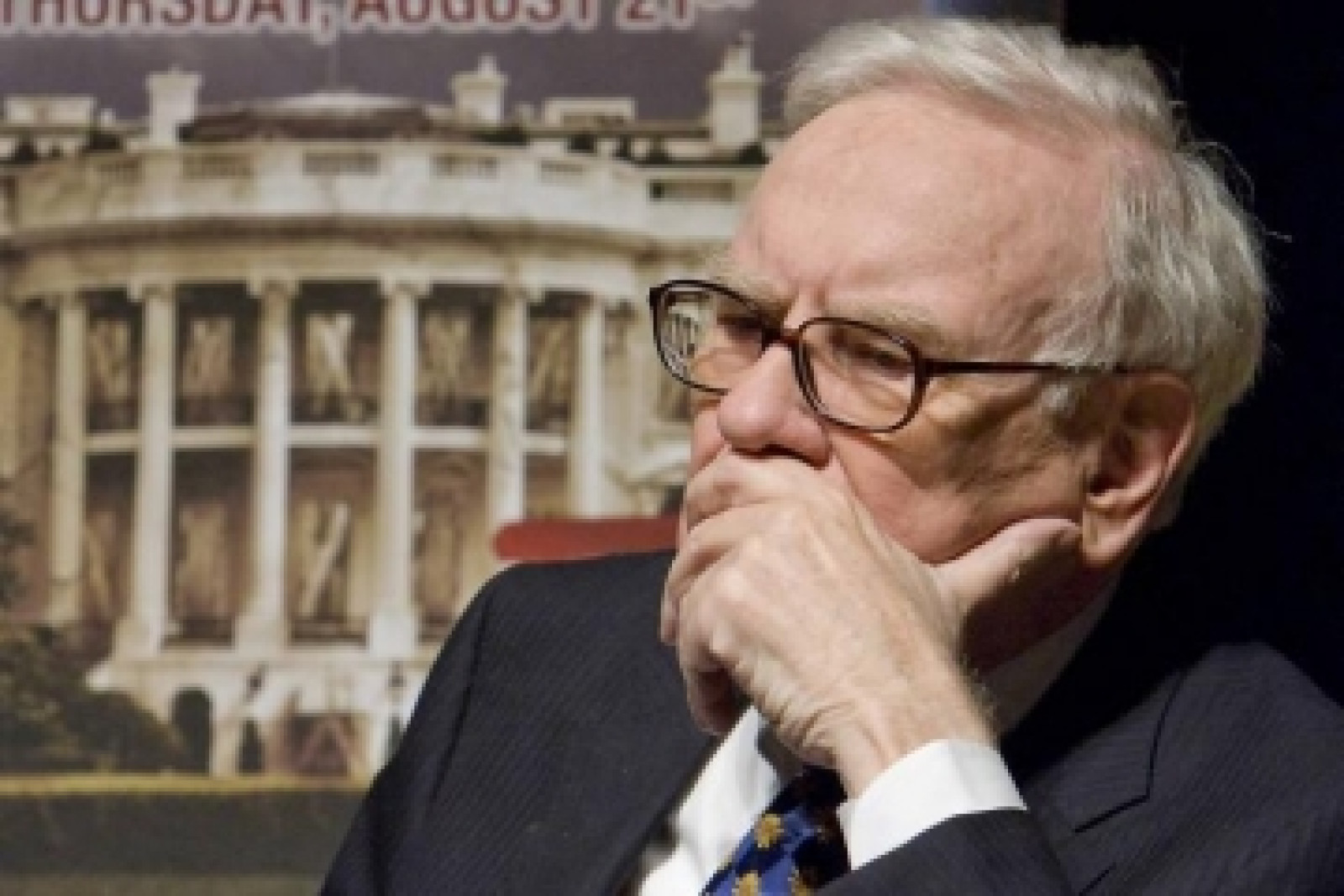
Warren Buffet, one of the world’s most successful investors and richest persons (number 3 in the 2011 Forbes rich list - $50B) and the most generous philanthropist in history (he spent $37B on charity in June 2010) excited the public with his article in The New York Times called “Stop Coddling the Super-Rich”.
According to the US-Canadian Association of Traders and Investors under , Buffet decided to restore justice by offering the US Congress to increase taxes for the super-rich.
Why did Warren Buffet decided to turn against the USA’s riches people and what can be the consequences for investors?
Mr. Buffet has been criticizing the US taxation system for a long time. This time he noted that in 2010 his Berkshire Hathaway paid $ $6,938,744 as taxes, which is 17.4% of his taxable income and “that’s actually a lower percentage than was paid by any of the other 20 people in our office. Their tax burdens ranged from 33 percent to 41 percent and averaged 36 percent…”
So, the billionaire offers to restore justice by increasing taxes for the rich people instead of cutting taxes for the poor and middle class. Here is what Mr. Buffet offers:
“But for those making more than $1 million — there were 236,883 such households in 2009 — I would raise rates immediately on taxable income in excess of $1 million, including, of course, dividends and capital gains. And for those who make $10 million or more — there were 8,274 in 2009 — I would suggest an additional increase in rate.”
How can the union of Warren Buffet and president Obama help the USA?
President Obama supported Buffet’s idea. During one of his speeches Obama said the existing taxation system need reforms. If to increase taxes for the rich, it will help to solve the budget deficit problem and to run the country’s public debt more efficiently.
· Back in the days of the US debt ceiling disputes, the Democrats offered tax hikes for those who earn over $250K a year. But the Republicans denied the offer.
· However, the tax-hikes-for-the-rich issue is rather complicated. It’s not about the tax rates. It’s about those who will have to spend more on taxes. Warren Buffet has a good sense of humor. That is why all his words need economic proof.
· Most of the taxes paid by Warren Buffet come from the dividends and income earned from trading various securities. The income is taxed for several times on its way to the billionaire’s account (corporate taxes, income taxes etc.). It appears that Buffet spent on taxes 45% of his income while his employees paid less money. So it turns out that American billionaires spend more on taxes than any other US taxpayer.
· The overall (nationwide) situation looks different. As for those employees of Berkshire Hathaway, who spent 33-41% of their income on taxes, they are not representatives of the genuine middle class in the US. They earn big money and consequently contribute to the US budget quite a lot together with Buffet and other billionaires and multimillionaires.
· According to the US Internal Revenue Service (IRS), 1% of the country’s wealthiest people make 33% of federal taxes, which seems to be quite logical and fair. But in reality, their net income is half again as low as the taxes paid by them.
· In reality, 5% of the country’s taxpayers pay 53% of federal taxes, which is more than the amount paid by the remaining 95% of taxpayers. It is this rich minority (5%) that the Democrats want to impose higher taxes on. It is much easier for the authorities to intensify the tax pressure on the 5% minority, which is effective in business and economic development, than to promote higher income (as the base of further tax hikes) for the remaining 95% of taxpayers.
For the sake of comparison, 35% of all the US taxpayers (the poorest ones) make up only 1% of the net income tax, while earning 4% of the country’s net income. It makes the US taxation even more unjust.
Who really pays and earns?
If to have a closer look at the US taxation system, it becomes clear that the poor taxpayers get their money, which they spent on taxes, back in the form of various benefits and rebates. Consequently, most taxpayers contribute very little to the US treasury and budget. Some of them even earn at the expense of the richest taxpayers.
Moreover, a couple of million of wealthy Americans - the richest taxpayers - are beneficial for the country in other ways apart from taxation:
- They are efficient in business and production, thus contributing to the development of the national economy
- They create new jobs
- They make important discoveries
- They are the heart and the brain of the American nation. Obviously, it is natural that this valuable 5% minority needs favorable business conditions and taxation.
That is why when it comes to tax burden or any other major issue, it is necessary to remember that a “just” solution is not always the right one.
Market Leader and would appreciate it if you could participate in a survey. Please, visit the Academy’s forum form traders and investors and answer the following question:
Will the US authorities impose higher income taxes on the rich?



