Alex von Stachelkopf
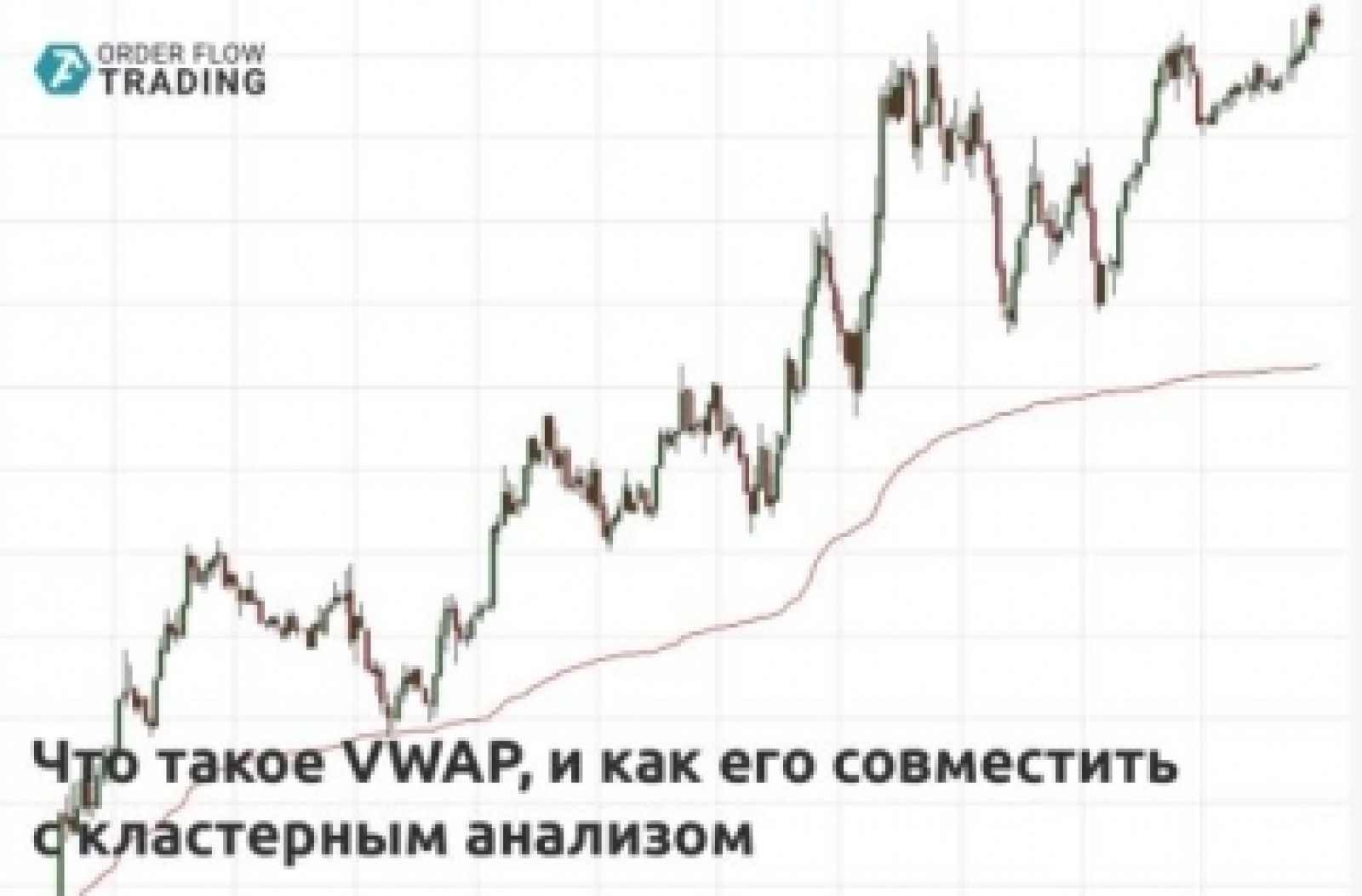
In order to get a competitive edge over others and simplify the process of reaching the trading goals, many traders take advantage of a number of helper tools like trading strategies and indicators. Today, we are going to take a closer look at the indicator named Value-Weighted Average Price (VWAP). What are the benefits of using it and why do they recommend using it?
The given indicator displays the average price of the financial asset, weighted by the trading volume over a certain period. Most rookie traders out there either don't know about VWAP or simply ignore it, which is a mistake. This indicator is based on something that institutional investors and other big-scale market players usually pay attention to when making their investment decisions. It is also used by numerous HFT algorithms, while prop-trading companies use it to figure out how weak or strong a certain asset is at the moment.
Still, it's important to keep in mind that VWAP is not a clairvoyant. It cannot predict what the price will be in 5 minutes, 1 hour, or 24 hours. However, the indicator makes it possible to clearly see who is in control of the market - the buyers or the sellers. Basically, the only thing that's left to do is to decide whether you want to go with or against those in control.

VWAP Indicator. How it its used in trading?
To achieve stunning results, the indicator should be monitored continuously. During retracements, the indicator points at the levels of support and resistance. It also helps the trader to confirm the trend. If you sell big above the indicator or buy big below it, the price will see almost no effect. Major players often trade close to VWAP.
When the price is moving in a range, thus indicating a flat market, the indicator start looking like a horizontal line. Don't treat any intersection between the price and the indicator as a signal to buy or sell. Instead, wait until the price consolidates above or below the indicator line. If a trade is underway, we can see an ascending or descending line depending on the direction of the trend. Be careful with in such circumstances as well so as to avoid getting caught by fake intersections.
The gap between the price and the indicator at the start of a trading session indicates weakness or strength. If that's the case, don't wait for intersections, open a trade when the price gets close to VWAP during a retracement. In such cases, the risks are minimal and much smaller than the potential profits.
Buy above VWAP if it's looking up and sell below it if it's looking down. The bottom line is this: if used wisely, this indicator can help you to make better trading decisions. However, this is just a tool and no tool can replace a decent expertise in trading. Practice is the only way to master this trading craft, especially if equipped with a decent trading strategy.
 Alex von Stachelkopf