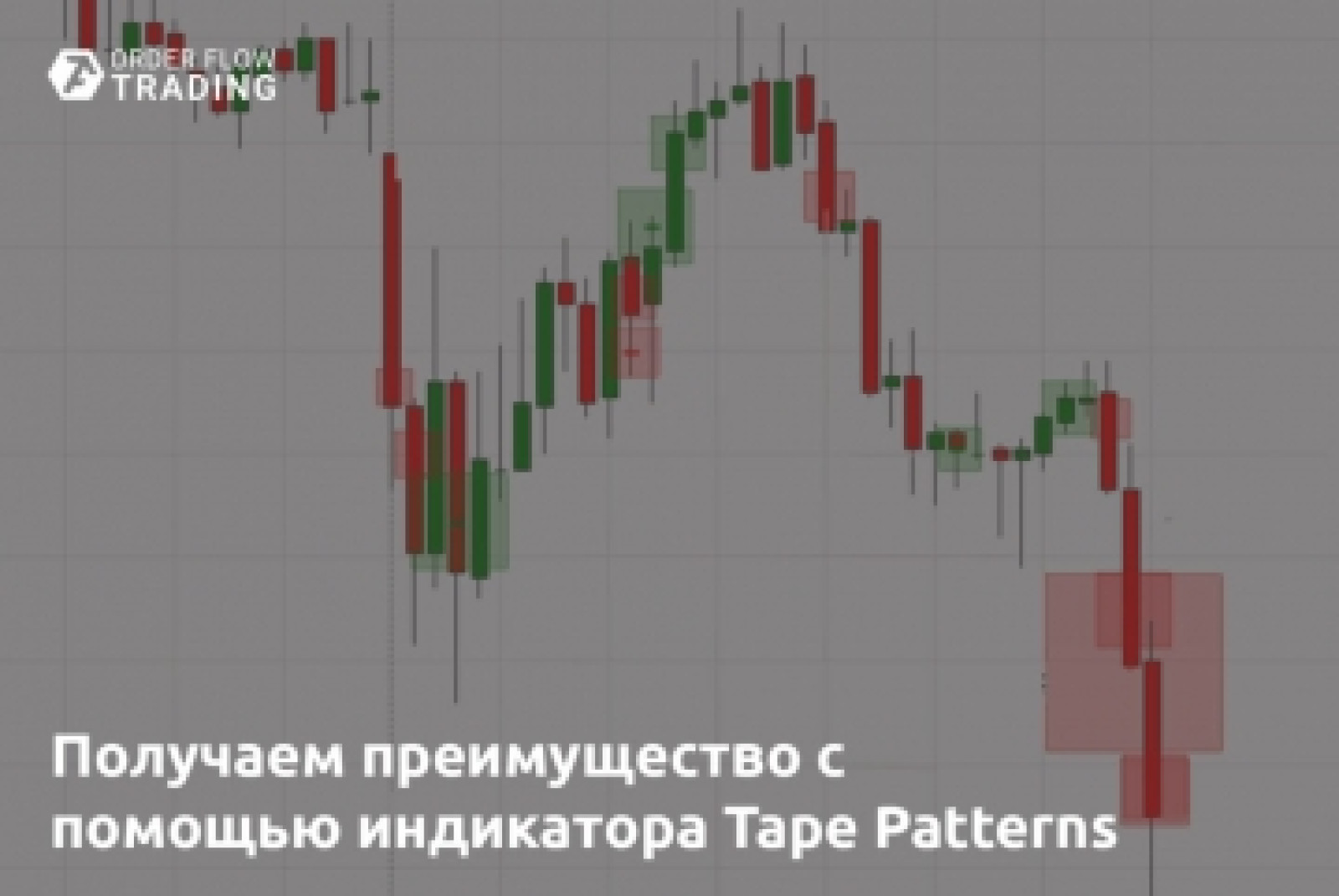
Traders often use various kinds of technical indicators these days. The list can be rather long, from popular ones like RIS, MACD etc. to less popular ones like Tape Patterns.
The popular indicators usually have a simple set of customizable settings, and are often used with default settings as well. At the same time they don't want to mess with some other indicators, which are more flexible and customizable, but at the same time more powerful and informative. While some of them may not worth trying, some others are definitely worth giving it a try. Tape Patterns is one of such less popular but very promising technical indicators.
In the first place, the Tape Patterns indicator looks interesting when applied to intraday trading since it filters and displays the trading data by trading session. This is how it works: it takes the data from the print feed and highlights the chart sections according to the preset criteria.
Please keep in mind that the indicator doesn't generate any buy or sell signals. Its major goal is to make it simpler for the trader to track the intensity and speed at which new trading volume is generated in the market. However, it's the trader's responsibility to interpret the data.
Tape Patterns is not a magic wand taking all of the trading routine off the trader's shoulders. Simply put, this is an assistant, not trading robot to outsource the trading routine to.
This is what Tape Patterns indicates:
- min trading volume for each print
- min print amount for each chain
- time between the prints
- ratio between the volumes of the chains
- big-scale standalone prints
For more details on a specific print, just hover your mouse over the highlighted area of your interest and press the Ctrl key.
Tape Patterns is a dynamic indicator. As opposed to static indicators, it displays segregated, detailed volumes instead of the total one. Having a dynamic indicator at your disposal is especially important if you are trading intraday. For example, it's important to figure out whether you are dealing with 100 ticks * 10 contracts or 10 ticks * 100 contracts. The total volume is equal in both of these cases. But the impact varies dramatically, and you can see this since you can easily figure our where the smart money comes in.
Simply put, insignificant levels take time to build, and those are comprised of a big number of relatively small trades. On the contrary, forming key levels is fast and consists of bigger trades. There are exceptions to the rule, but it holds true for the most part.
With tat being said, utilizing a dynamic indicator provides the following benefits:
- you can see when a significant volume is building
- you can spot the times when the trading volume is capable of reversing the price
You can also use OI Analyzer to figure out when the trades are opened and closed.