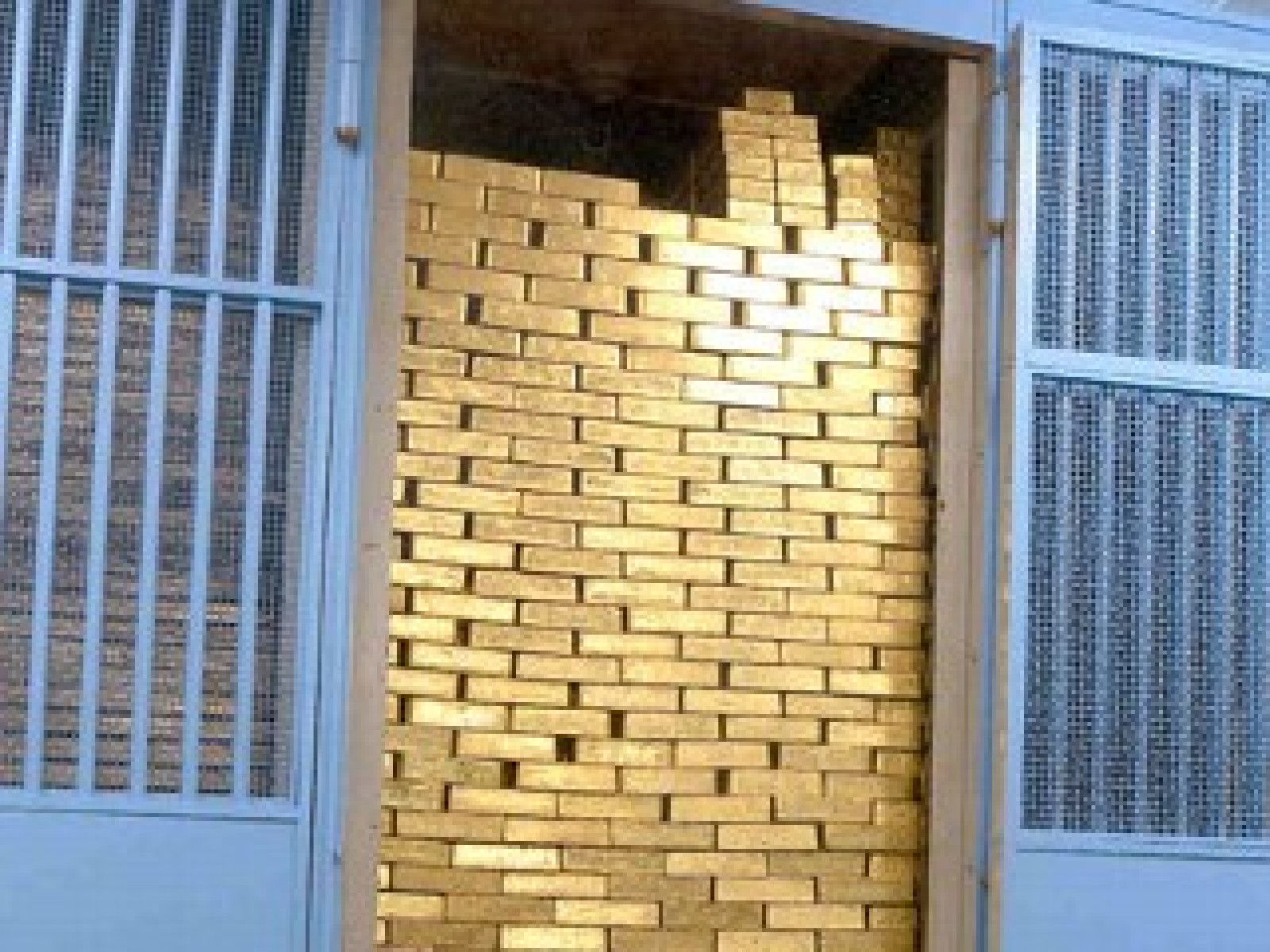
From now on, Russia is the world’s biggest gold buyer apart from being the world’s biggest oil producer. According to the IMF, over the last decade Russia purchased over 570 tons of the precious metals.
At this point, the total mass of Russia’s gold reserves is 3 times as big as the one of the Statue of Liberty in New York.
China is the second biggest buyer of gold. Russia has outpaced China by ¼ of the purchase.
Russia Buys Gold
The more gold a country has, the more stable its national currency is during crises. Experts say that Putin’s current political course aimed at increasing the country’s gold reserves looks quite logical. Since Putin came to power, gold has appreciated by 40%.
More and more institutional and private investors show interest in gold. Obviously, the major reason for that the current monetary policies of most central banks around the globe. Gold is gradually turning into a safe-haven asset because the Fed, the ECB and the Bank of Japan keep increasing their money supplies.
For reference sake, in 1998 when Russia defaulted on its $40bn debt, the cost of an ounce of gold was equal to the cost of 28barrles of crude oil. However, this ratio changed to 1:11.5 (sometimes reaching the low of 1:6.5) in 2000 and 2005. Today’s ratio is 1:14.
In 2005, Vladimir Putin decided to increase the share of gold in Russia’s gold-and-currency reserves. At that time, gold cost some $495/oz. This is the 18-year low. Russia’s gold reserve was equal to 387 tons. Within a month, the share of gold increased up to 3.5%.
Today’s gold prices fluctuate around $1665/oz. In 2012, gold appreciated by 7%. This was the 12 bullish year for the precious metal.
According to the survey conducted by Bloomberg, the price of gold will reach $1825/oz in 2013.

Putin’s Gold Politics
According to the expert of Standard Bank Plc., Putin’s gold politics fits well into his nationalism strategy. It looks more like defense play but it does work.
As for other world leaders, they turn out to be less lucky then Putin. For example, Gordon Brown, ex-Prime Minister of the United Kingdom, sold over 60% (400 tons) of the UK’s gold reserve in 1999-2002 while the price of gold was at the bottom. As a result, this step cost British taxpayers several billion pounds.
According to Marcus Grabb from the World Gold Council, the quantitative easing performed by major economies stimulates the demand for gold, especially in emerging markets. Russia and China used to be net sellers of gold. Now they have turned into net buyers of the precious metal. They purchase 400-500 tons a year on average.