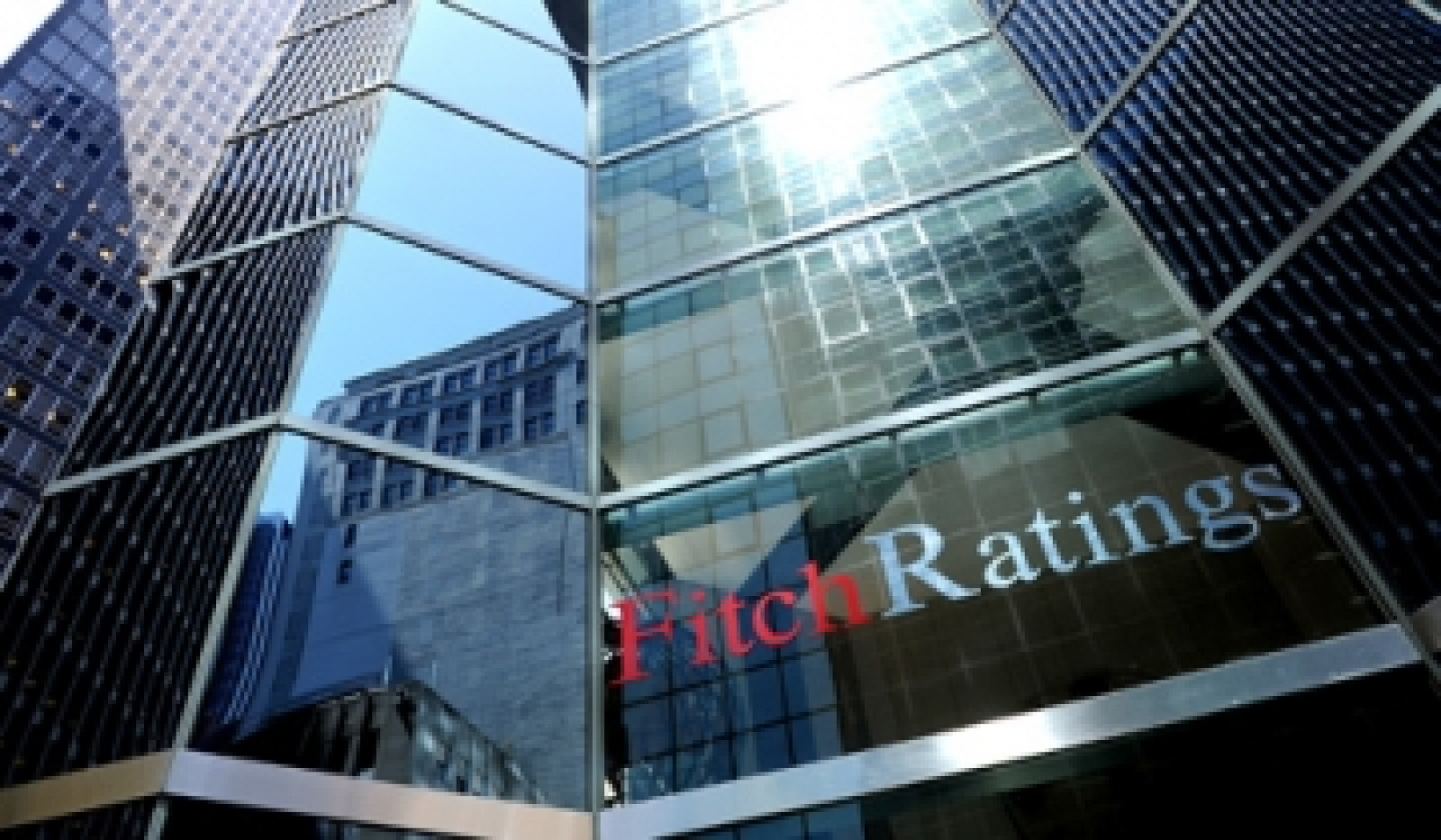
After cutting to junk the sovereign ratings of Greece, Portugal and Ireland and intimidating investors with possible cuts in Spain and Italy’s ratings, the world’s most influential rating agencies switched to European banks.
A week ago Moody’s agency cut the ratings of 12 British and 9 Portugal banks. Standard & Poor’s downgraded Dexia’s rating. A couple of days ago Fitch cut the ratings of the Royal Bank, Scotland , Lloyds Banking Group and UBS and changed the rating forecast for the world’s 8 major banks - Bank of America Corp, Morgan Stanley, Goldman Sachs Group Inc., Barclays Bank Plc, BNP Paribas, Credit Suisse Group AG , Deutsche Bank AG and Societe Generale.
David Buik, an analyst for BGC Partners is sure that “hell has a better chance of freezing over than the British government allowing Lloyds or RBS to go to wall. So this is ridiculous.”
According to the Guardian, in 2006 an S&P employee wrote in an email to his colleague, which contained the following lines: "Let's hope we are all wealthy and retired by the time this house of cards falters. :o),"
How do politicians, financiers, investors and businessmen treat those rating agencies? Do they treat them as lighthouses in the midst of a rough sea or as weapons of financial and economic manipulation?
Why do rating agencies cut sovereign ratings?
These days everyone seems to be blaming rating agencies for endless economic misfortunes seen around the world:
· Viviane Reding, European Commissioner for Justice, assumes that Europe shouldn’t let 3 private American raters (Moody’s, Standard & Poor’s and Fitch) humiliate and destroy European economy. She offers to divide those 3 rating giants into 6 and to create a European rating agency.
· Tim Johnson, Chairman of the US Senate Committee on Banking, calls those raters irresponsible.
· Warren Buffet is sure that the rating agencies shouldn’t have downgraded the US credit rating.
· The SEC investigated into the work of 10 major rating agencies, including the mentioned 3 giants.
· In August the Italian police searched the Italian offices of Moody's and Standard Poor's and expropriated some documents. Silvio Berlusconi recommended the analysts to stop reading the yellow press.
· After Portugal ’s rating was cut to junk, thousands of local citizens arranged protests in social networks with different slogans like “F***k, Moody’s!” Portuguese hackers went as far as hacking Moody’s website and awarding Portugal with the highest ratings possible.
Are the raters objective?
According to experts, the answer is obvious:
· In advance of the latest global crisis those rating agencies upgraded the rating of Lehman Brothers and mortgage-backed securities (MBS).The y retained those ratings even when the crisis had started.
· Later Moody's agency admitted their mistakes. As a result, the holders of mortgage-backed securities lost up to 60% of their investments.
· Later the SEC arranged an investigation to find out that the rating agency lacks skilled personnel.
· Rating agencies earn from selling their analytics to banks and companies. They also sell info to investors, but in this case the profit is relatively small. Consequently, we can see a conflict of interest. W. Harrington, Ex-President of Moody’s Investors Service, says that US rating agencies are corrupt. This is what he wrote in his letter to the SEC: "This conflict of interest permeates all levels of employment, from entry-level analyst to the chairman and chief executive officer of Moody's Corp."
· Previously mass media reported about numerous cases of revenge. For example, after Hannover Re, a German company, refused to cooperate with Moody’s, the agency downgraded its rating. In a couple of hours the company lost $ 17M of its value.
 However, according to the experts of , the most important thing is that those rating agencies bear no responsibility for what they do or say. It is almost impossible for an investor to get some compensation. There is one prominent case: Calpers, a major US pension fund, sued 3 rating agencies for losing 1B dollars on purchases of securities. They were rated as “reliable” but their emitters went broke shortly after the purchases.
In essence, it is not about the raters themselves or their ratings, it is all about who uses them and how they do it. The European Commission’s recommendations are wise: it is necessary to use those ratings only to prove or disprove one’s own suppositions instead of treating those raters as the ultimate authority.
Market Leader and would appreciate if you could participate in a survey. Please, visit the Academy’s forum for traders and investors and answer the following question:
Do you think there is an alternative to rating agencies?