
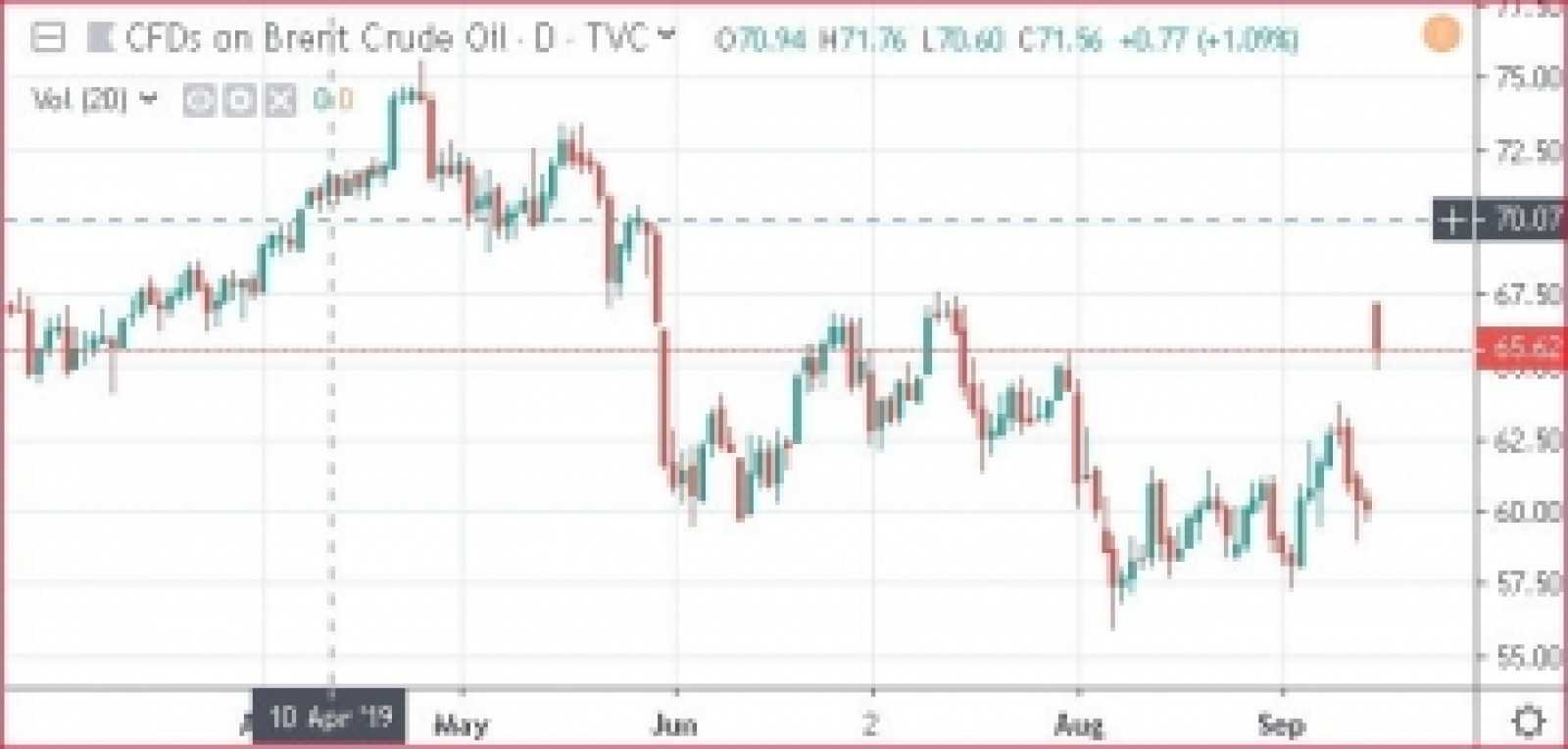
Gold, yen, and oil currencies are getting more expensive. The strike came for an unexpected direction. Saudi Arabia's oil facilities were attacked, which increased geopolitical risks in the region and simultaneously undermined the global oil supplies. That was basically the reason why crude oil prices made the biggest rally in history but then moved back a bit and are still trading over 10% higher relative to the start of the trading session.
Other markets seem to be affected by the situation as well. Gold, yen, and oil currencies have gotten more expensive. At this point, two questions are of great importance: how fast the economy is going to recover and whether the tensions between the USA and Iran are going to be deescalated.
In the meantime, the market has been waiting for Friday's Fed meeting since the start fo the trading week. At the same time, international markets have been closely watching the situation around the trade tensions between the United States and China. Since the last 10 days have been optimistic for the markets - they say a major agreement is possible and very likely - is it the right time to start another fight? We recommend being skeptical about various trade wars and the Brexit.
Will the Fed cut the interest rate?
Going back to the key event of the week, we think that the Federal Reserve is going to cut the key interest rate by 25 base points, down to 1,75-2,00%. The report is going to be a mild one. Why? Firstly, the world's leading economic indicators dropped after July's meeting minutes. Secondly, the trade wars got escalated, which increased the volatility in many financial markets out there. Thirdly, some of those decision-makers are now concerned about the reversal of the profitability curve, which is something that's has been going deeper over the last few weeks. The simple question is why not 50 base points? President Trump would be glad to see this but this is something that's reserved for crises, but it's certainly not the case right now.



