Today’s oil prices, which are relatively high, as well as some tensions in Saudi Arabia, may hinder the prolongation of the OPEC+ agreement signed last year, PRIME reports.
The agency quotes some experts who assume that the anti-corruption campaign in Saudi Arabia is not going to affect the national economy directly. The consequences are rather of psychological nature and may affect the way of perceiving market risks. Those changes may also affect the investors who got interested in the 5% of Saudi Aramco’s stock. The shares will be available for sale in 2018. As for the most sensitive traders, they have probably been affected by the news that Saudi Arabia is going to cut their oil export by as much as 650K barrels a day at a time down to 7,15 million barrels a day.
Still, other experts believe that the market reaction to the situation in Saudi Arabia looks a bit exaggerated. The thing is, there is a number of factors preventing oil prices from consolidating around the current levels. An increase in the U.S. shale oil production is one of them.
At the same time, today’s oil prices may really disrupt the prolongation of the OPEC+ deal. China, the world’s biggest oil consumer, thinks crude oil is overpriced. That’s why China has considerably reduced the import of crude oil. At the same time, the concerns about the shipment of crude oil from Iraqi Kurdistan are now gone.
The next OPEC summit in Vienna, Austria, is scheduled for November 30th. All the other OPEC+ participants are invited to the summit as well. Apparently, the key issues on the agenda will be the prolongation of the OPEC+ agreement until March 2018.
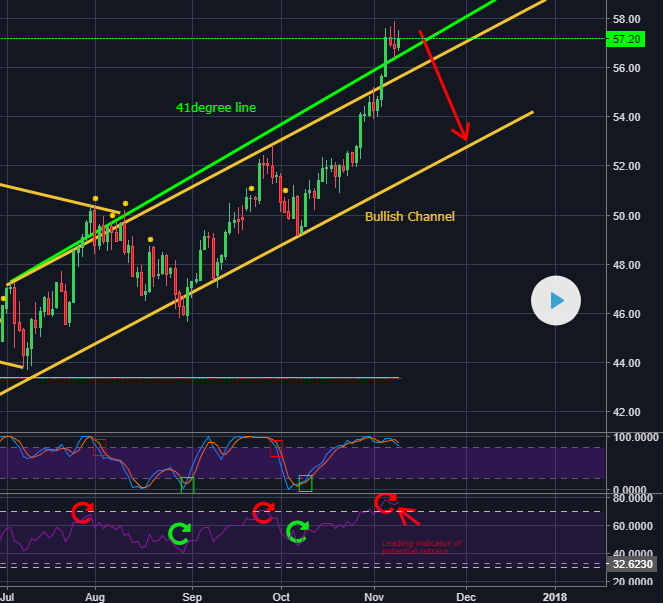
FortFS analysts report that Brent oil exceeded the $64/b threshold yesterday.