
 Serj Panchuk
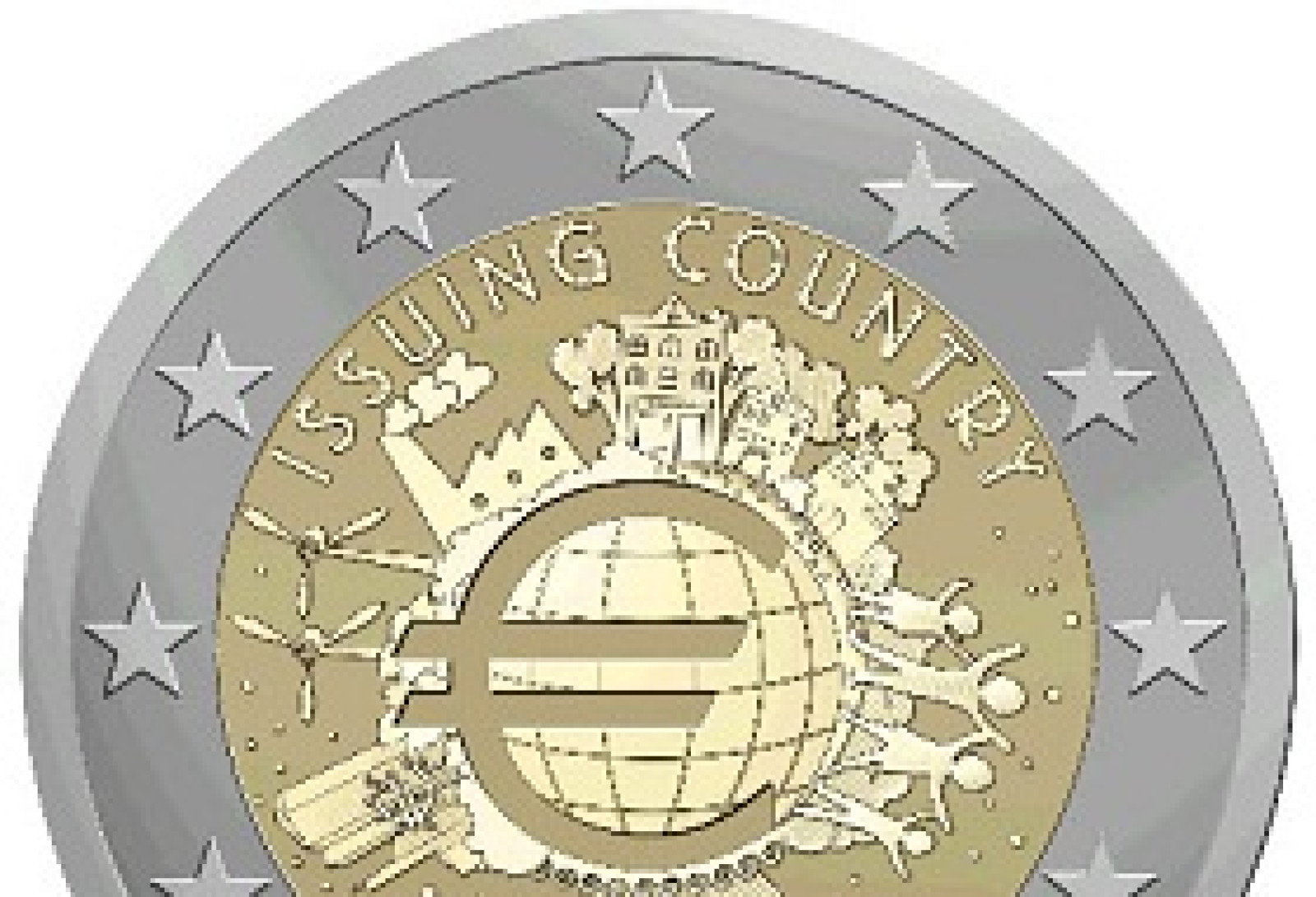
On January 1st 2012 the common European currency celebrated its first significant anniversary – 10 years. Mass media have already called it a “messy birthday”, thus hinting at the eurozone crisis. In late 2011 numerous respected experts warned about the forthcoming collapse of the Euro. The common currency is still alive and its future is threatened.
Why did Europe introduce its own common currency?
According to the experts of , the common currency was introduced in 1992 after the Maastricht treaty took effect. The introduction of the Euro was a part of bigger-scale integration processes inside the EU. The new currency should have become a symbol of the renewed and more dynamic European Union.
In reality, the Euro was introduced 13 years ago in 1999, but over the next 3 years it was used for electronic transactions only. The ECB was founded in 1998 to ensure the stability of the common currency.
The Euro cash appeared on January 1st 2002 as the common currency of 12 European countries, which formed the eurozone. Those countries abandoned their national currencies in favor of the new one.
The founders of the Euro wanted it to become a new global reserve currency as the EU’s economic potential was almost equal to the USA’s one. Moreover, at that time (in the late 1990s) the Chinese Yuan cannot be considered a real rival. However, the common currency did become the world’s number
First of all, the introduction of the common currency was expected to contribute to the EU economy thus suggesting a better life for businesses and millions of Europeans.
The results
Over the last 10 years everything has changed. More and more Europeans are not reassured any more. They are irritated.
The expansion of the eurozone. Over the mentioned period, 5 more countries have joined the eurozone. Now there are 17 of them. The total population is 332M people. The UK, Denmark and Czech Republic preferred to preserve their national currencies, thus questioning the future of the common European currency form the very beginning.
The exchange rate. On Jan 9th 1999 European banks started using the Euro as a means of non-cash payment. Initially, the EURUSD exchange rate was equal to 1.18. Then it started declining and reached the all-time low of 0.82 in October 2000. Afterwards the ECB managed to restore the exchange rate. During the pre-crisis years the common currency was a safe asset. However, in 2009 Greece saw a debt crisis, which further escalated into the eurozone crisis, thus undermining the stability of the common currency.
According to the SRP experts of , technically, EURUSD is forming a hidden wave (B D1). By now the price has reached the 1st negative level 1,2885, the next on is 1,2724.
The situation should be monitored on smaller-scale timeframes. When the first bearish momentum is completed, we may see a new bearish ABC cycle of wave level H1, with falling below the mentioned levels. Otherwise, the price will initiate an upward wave (C D1):

Thanks to the stable exchange rate and the high credit ratings of eurozone countries during the 2000s, the US Dollar yielded some ground to the common European currency. These days almost all the countries around the world store their currency reserves in EUR and USD.
Besides the 17 official members of the eurozone, Monaco, Vatican, San Marino, Andorra, Montenegro and Kosovo also use it as their national currency.
All in all, there are 14.4B euro banknotes and 97B euro coins circulating around the world. Their total value is equal to €864B and €23B correspondingly.
The last decade didn’t show stable prices in the eurozone. Most foodstuffs became more expensive: apples +65%, wheat +47%, Coca-Cola +38%, milk +13%, bread +27%, coffee +39% etc.
What can happen to the common currency in the future?
Allianz SE, one of Germany and Europe’s biggest insurance companies, has recently published its report, which created prerequisites for the stabilization of Euro. During the period of Jan-Sep 2011 the company reduced its total proceeds by 78.5 euro or 2.4%.
Optimists: Guy Verhofstadt, leader of the Group of the Alliance of Liberals and Democrats for Europe, the eurozone will have no other choice but to undergo multiple (economic, tax and other) reforms in order to survive.
Mario Draghi is so confident in the single currency that he said: "I have no doubt whatever about the strength of the euro, its permanence and its irreversibility."
Christian Noyer, Governor of Banque de France, says that once all the measures approved during the latest EU summit are implemented, the eurozone’s economy will recover and grow much faster and may even become the world’s leading currency within 10 years.
Some EU non-eurozone members still want to join the currency union. Latvia and Lithuania are planning to join the eurozone in 2014. Poland is planning to do that in 2015. Bulgaria hasn’t specified the terms but is also willing to become a eurozone member.
Pessimists: Most common Europeans do not believe in the Euro currency any more. In particular, 50% of the French say the introduction of the Euro was a bad idea. Only 35% support the common currency. 70-75% of the Czech s and Polish are against entering the eurozone. More and more French, Germans and Italians start feeling nostalgic for their national currencies.
Market Leader and would appreciate if you could participate in a survey. Please, visit the Academy’s forum for traders and investors and answer the following questions:
Do you think the introduction of the Euro currency was a good idea? Does the common currency have a future?
 Serj Panchuk



