Tatsiana Ketrar
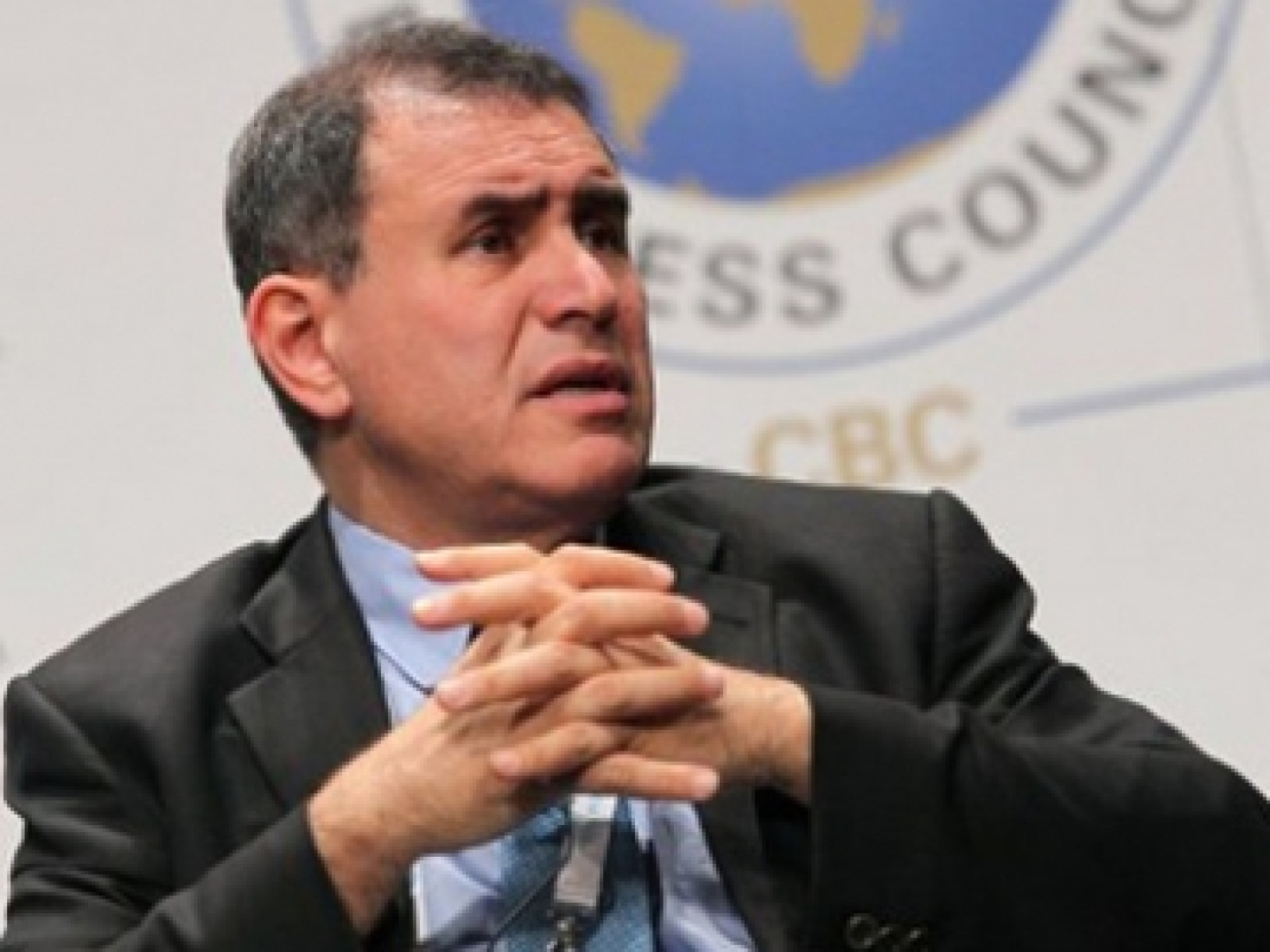
Nouriel Roubini, an American economist and a Nobel Prize winner in economics, became world-famous after forecasting the latest global economic crisis. His opinion is respected around the world. In his recent article published in The Financial Times Mr. Roubini says the eurozone may collapse.
Actually, this is not the first time Roubini warned the world of the forthcoming fate of the eurozone and its common currency. The American economist assumes that the current political and economic situation in Italy confirms his expectations. According to him, Italy will most likely have to return to the Italian Lira - its previous national currency - in order to curb the escalating debt crisis. Once Italy leaves the currency union, it will most likely result in a collapse of the entire eurozone.
Possible scenarios:
According to , Nouriel Roubini offers the following 4 scenarios for the eurozone:
Symmetrical reflation. This is the best option for restoring growth and competitiveness of the eurozone's periphery while undertaking necessary austerity measures and structural reforms. This implies significant easing of monetary policy by the European Central Bank, which can eventually depreciate the common European currency against other major currencies. That is why both Germany and the ECB oppose the idea.
Recessionary reflation. It implies tough austerity policies. However, austerity and spending cuts lead to production cuts, at least in near-term perspective. In order to avoid the negative consequences of such structural reforms and to improve the balance of trade it is necessary to depreciate the common currency.
A default followed by a withdrawal from the eurozone. The common currency may survive if the sick peripheral eurozone economies go back to their national currencies – lira, drachma, peso etc. However, Euro will also suffer losses because the currencies of the former eurozone members will depreciate. That will be the European variant of Lehman Brothers’ collapse, which caused the 2008-2009 global crisis.
Peripheral eurozone economies. The EU leaders can try to ignore the economic problems seen in those debt-ridden peripheral eurozone economies. Theoretically, it is possible. However, this would be an extremely costly solution for other eurozone members like Germany and France.
This is a comprehensive outlook.
Italy as the last warning and a major threat for the eurozone integrity.
According to Nouriel Roubini, Italy is the current indicator of what is happening to the eurozone:
Investors keep losing confidence in Italy. The Italian bond yields have already exceeded the 7% psychological limit.
Italy’s sovereign debt is too massive - $ 1,9 trillion – the world’s 4th biggest one. The Italian economy needs to show a 5% increase a year just to avoid the growth of its debt. This is unreal for now.
Debt restructuring is not a solution. Roubini assumes that even a debt indulgence won’t solve the country’s economic problems, including insolvency and poor economic performance.
Time deficit. The new Italian government needs at least a year to show some results, which is a very long period during a crisis.
There is no liquidity reserve. Italyis the eurozone’s 3rd biggest economy. It is too big to save even by expanding the EFSF up to € 1 trillion.
According to Mr. Roubini, Euro can be saved only through efficient individual efforts of all the eurozone economies. They shouldn’t count on external help.
ECB should be more active…
Nouriel Roubini warns the eurozone that investors are not blind or deaf. They do not trust all those reassuring speeches made by EU leaders. All the eurozone members must understand that transferring their national problems to the European-wide level will only escalate the eurozone crisis. According to the American economist:
The ECB should be more active in solving the crisis. In particular, the central bank should get a right to give unlimited loans to all the eurozone members and to reduce the key interest rate down to zero.
The ECB should also divide (at least conventionally) the eurozone in to the core and the periphery.
According to the experts of , the eurozone’s economic crisis is not the only one. Over the last 18 months almost a dozen of European countries have seen a change of power. More and more nationalists keep coming to power in Europe (Finland, Spain etc.), which only deteriorates the forecast for the destiny of the common European currency.
There are many evident signs that Europe is falling in to recession. Italy now seems to be the main headache. European authorities may simply fail to save Italy because they lack funds.
EURUSD prospects:
The Department of Masterforex-V trading System, offers the following scenarios (the chart below):

Market Leader and would appreciate if you could participate in a survey. Please, visit the Academy’s forum for traders and investors and answer the following question:
Do you think the eurozone will collapse in the near future?
 Tatsiana Ketrar